
What will your
timber become?
A table, a bench, smaller components—or a different use altogether. Start with what you want to achieve, then match the idea to the timber you actually have.
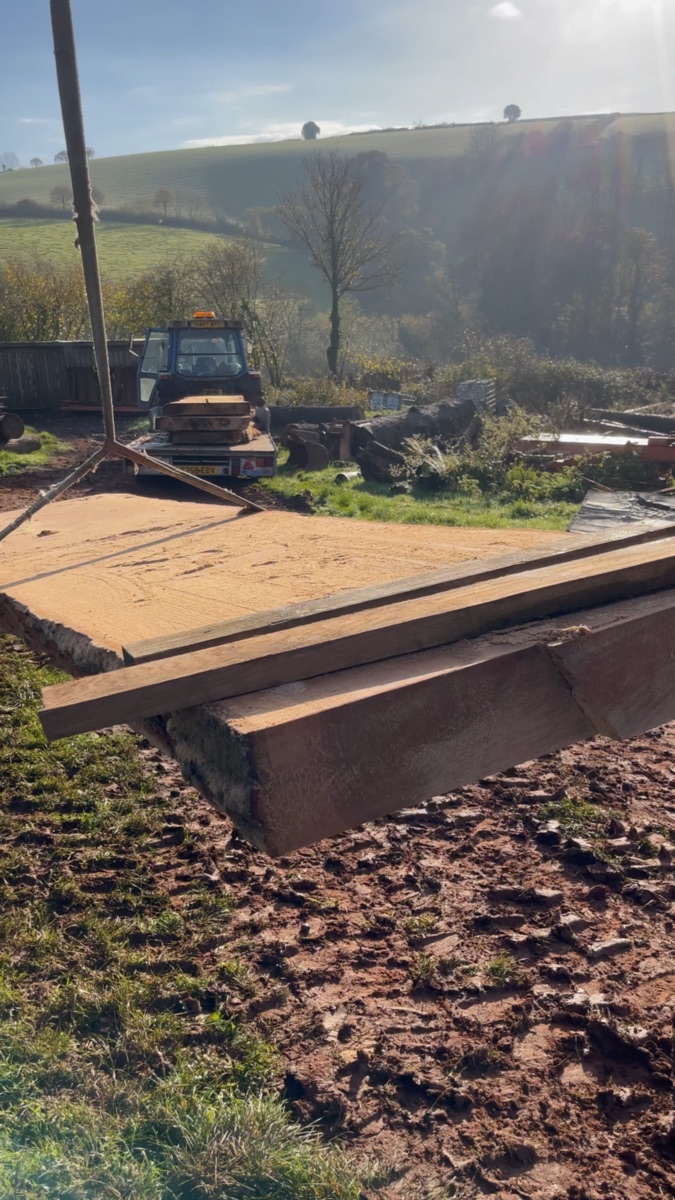
Explore your options ↓Sawn pieces awaiting further preparation. Their appearance alone does not establish readiness or suitability for a finished project.
Choose one idea to explore
Do you have timber you would like to use yourself? Pick a project you can describe in a sentence. A sketch or reference photograph can help a maker explain which pieces might work and what still needs to happen.
These are ideas to discuss, not a list of approved uses for any species or piece of timber. The Forestry Commission’s harvesting guide explains why different parts and qualities of a tree suit different products.
Make the idea fit the timber
Show what you have
Share your recorded species, sizes and condition. Say what is confirmed and what still needs checking. Revisit 03 · Assessment if the material has not been assessed.
Allow room to adapt
Could a shorter shelf, narrower top or several sections achieve the same purpose? Ask the maker which design changes would help.
Agree the remaining work
Confirm drying, machining, joining and finishing with the people doing the job. Use your record from 05 · Preparation.
A National Sawmills project
One tree. Several table sections.
Our Great Oak Table account describes supplying timber from one oak for a table built from sections. It was not one continuous slab spanning the whole table.
For a project of your own, ask whether a design made from several components could work where one uninterrupted piece would not. That is an option to explore with the maker; this project does not predict your log’s yield or the cost of your job.
Give the other material a plan too

Look at the pieces individually
A smaller piece
may still suit a job
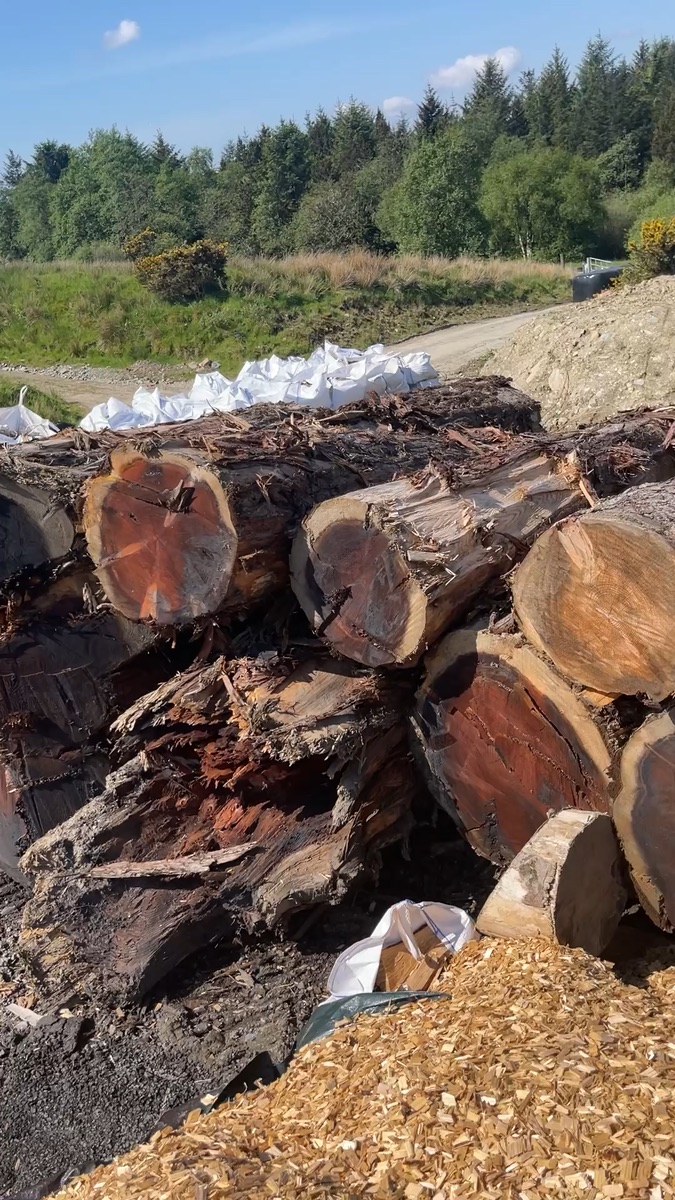
Ask whether shorter boards or offcuts could become components for your project before assigning everything to one route.
Separate materials and destinations
What can the
next user accept?
Agree the condition, quantity and collection arrangements with the recipient before setting material aside.
Explore whether sound shorter pieces suit the maker’s requirements. Size alone does not decide their usefulness.
Panel manufacture, pulp or other processing may be options for suitable material. Ask the recipient what they accept and whether your batch is practical to collect.
Fuel can be an appropriate use for some material. Confirm suitability and the requirements for the intended use; it is not automatically a failed outcome.
Wood products, reuse, recycling and energy recovery are different routes. The UK Biomass Strategy discusses resource efficiency and keeping material in use. It does not establish the best destination for your individual batch.
Is all this material “waste”?
Do not assume that every felled tree or processing residue is legally waste. Its status depends on the circumstances. In England, use the Environment Agency’s guidance where the status is uncertain; use the relevant regulator’s guidance in the other UK nations. Confirm the appropriate route before transferring material.
Useful can also mean left in place
Deadwood supports woodland biodiversity. Before removing a fallen tree or other woody material, ask the land manager or an ecology adviser whether some should remain as habitat, and how that fits the site’s safety and management needs.
This decision belongs at the beginning of the journey, not only after milling. If the tree is still standing or the work is not yet agreed, return to 01 · Tree. Forest Research’s deadwood guide explains the ecological role of this material.
Your next step: a brief someone can respond to
Choose a maker, sawyer or suitable recipient and send a short description. You can begin with:
“I would like to make [your project] for [where it will be used]. I have [the timber and information you know], with [photos or a sketch]. Could you help me work out whether it is suitable, what preparation it needs and which costs I should allow for?”
Keep a use record: the product or destination agreed for each group of pieces, the recipient, and the preparation still required. When the work is complete, add a photograph and the actual use—with permission from the people involved. That completes your own tree-to-use story.
Your idea can guide the whole journey
You can move between all six stages as the plan develops. Revisit assessment or preparation when a new question changes what the timber needs to do.
Need to discuss the milling part of your project? Share your idea with National Sawmills.
Sources and editorial review
Written by Jerry Andrada. Forestry review: Nick Backhouse, BSc Hons Forestry. Author and reviewer acceptance confirmed on 7 October 2026. Site-specific ecological or structural decisions require appropriate specialist advice.
- Forestry Commission, Seeing the wood for the trees (2025): product and material choices, not guaranteed acceptance or prices.
- Forest Research, Managing deadwood (2012): ecological context, not an individual site prescription.
- UK Government, Biomass Strategy (2023): resource-use context; no project carbon savings inferred.
- Environment Agency, Check if your material is waste: England-specific status guidance.
- National Sawmills, The Great Oak Table: company project account; no supplied measured recovery record.
Photographs show the material, not a certified grade or installed end use. The product drawings illustrate ideas to discuss.
About the author and forestry reviewer

Jerry Andrada
Author · Co-founder, National Sawmills Ltd
Jerry has approximately 17 years of practical experience, beginning with an apprenticeship in tree surgery at 18. His work has since spanned arboriculture, forestry, regenerative farming, timber extraction and timber conversion.
He acquired his first sawmill at 25 and has worked with portable bandsaw mills, dedicated slabbers and swing-blade sawmills, including contract sawmilling projects across the UK. Today, he is co-founder of National Sawmills Ltd and the UK representative for Peterson Portable Sawmills.
His contribution to these guides is practical: how timber can be accessed, extracted and converted at or close to its source, and what that involves in working conditions.
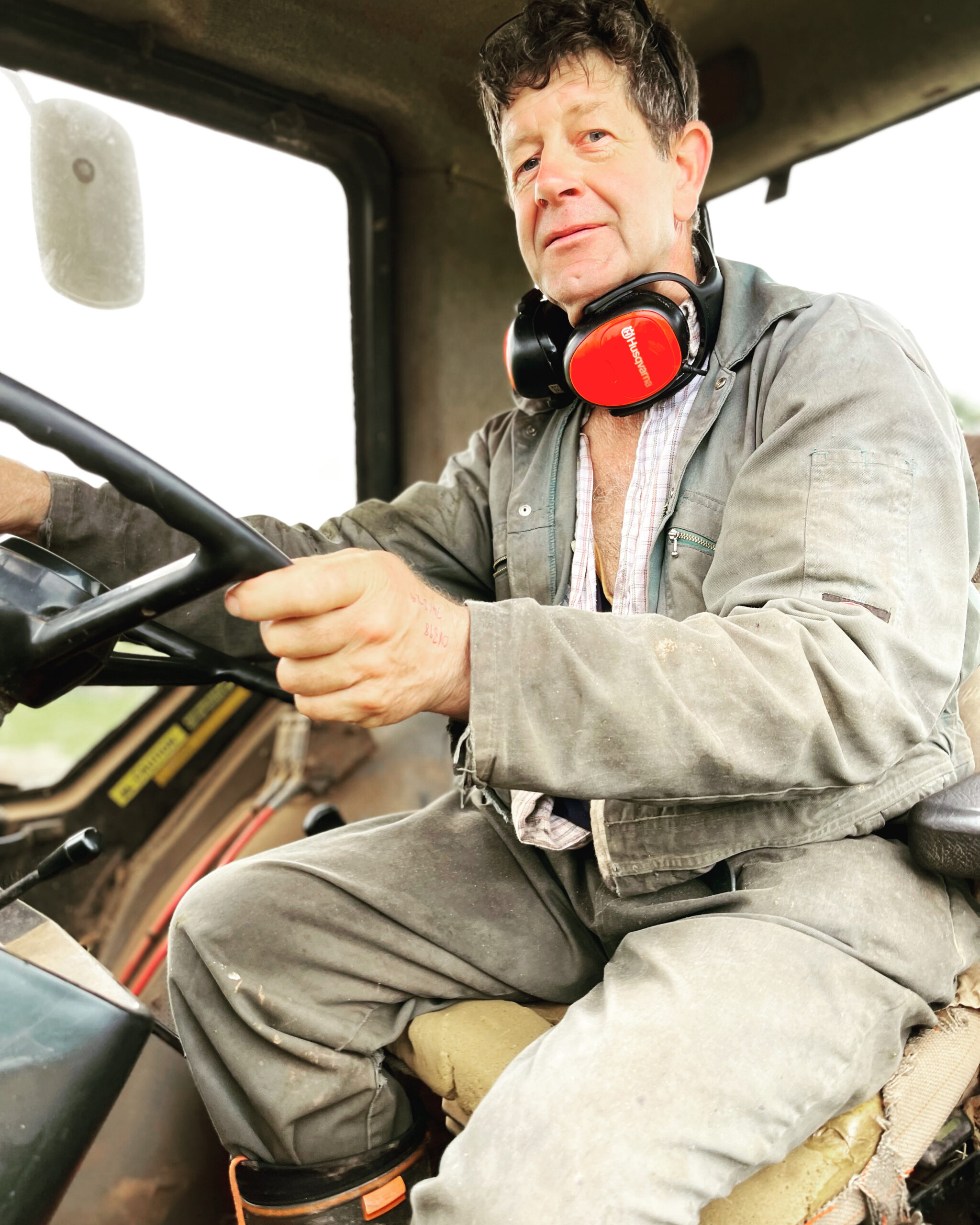
Nick Backhouse, BSc Hons Forestry
Forestry Reviewer · National Sawmills Ltd
Nick Backhouse graduated with a BSc in Forestry from University College of North Wales, Bangor, in 1989.
Following graduation, Nick applied his forestry education at Grantland Farm in Devon, integrating forestry and woodland management within an established working agricultural holding.
Woodland and agriculture have continued to be managed alongside one another at Grantland, giving Nick more than three decades of practical forestry experience within a working farm environment.
Nick also served as a Captain in the Devonshire and Dorset Regiment of the British Army, including service in Northern Ireland.
He now reviews National Sawmills’ educational content from the perspective of his formal forestry education and long-term practical experience at Grantland Farm.
Jerry Andrada and Nick Backhouse have approved the hub and all six guides. Author and reviewer acceptance confirmed on 7 October 2026. Individual trees, sites and intended timber uses still require their own assessment.