
What could your
log become?
Do you have a log and an idea for using it? Start by showing a sawyer what you have and what you would like to make. Its species, size and condition help them explore the options. You do not need all the answers before you ask.
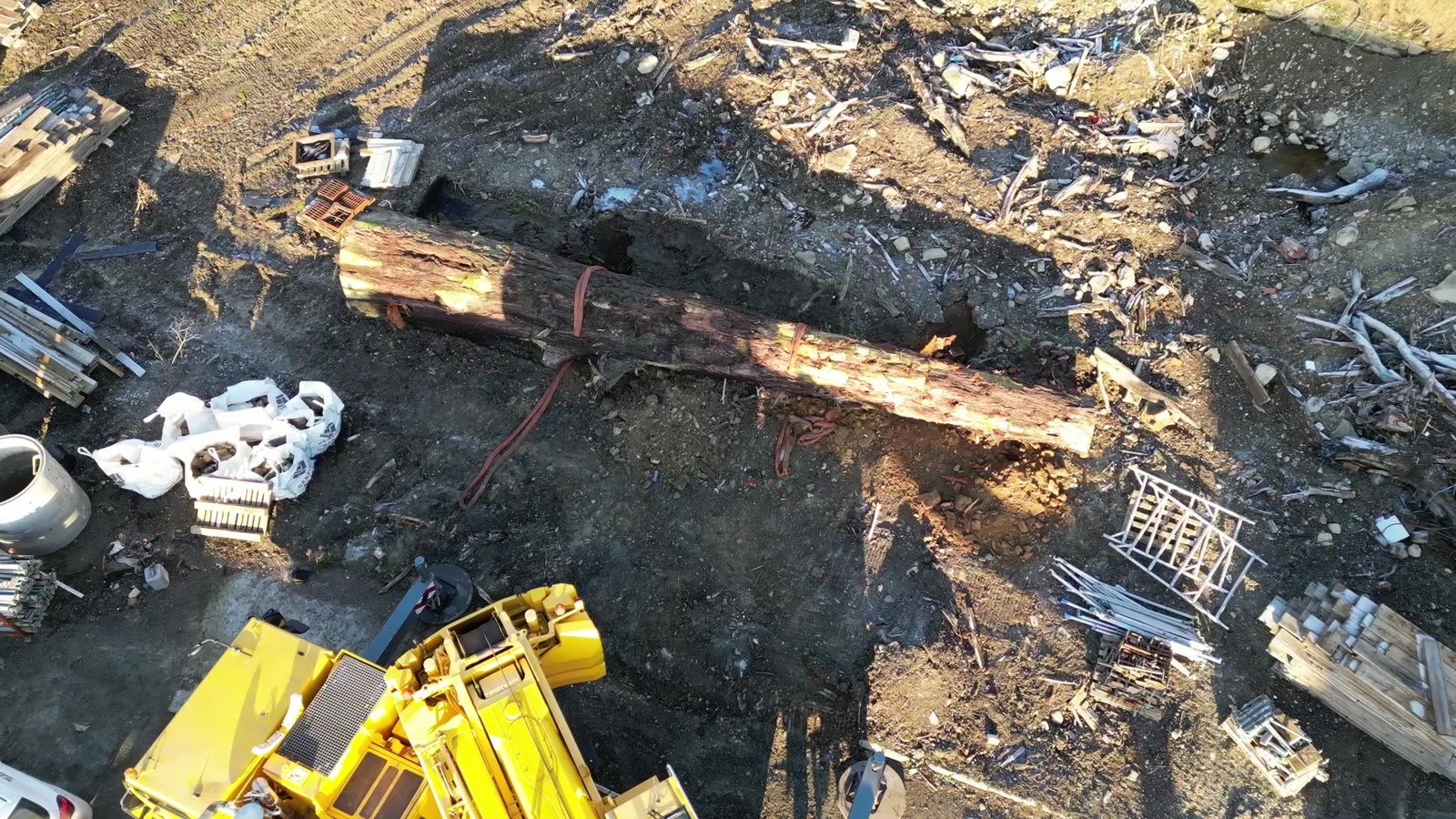
Start with your idea ↓Original National Sawmills archive footage. The photograph shows working context, not a graded or assessed log.
Start with the piece you want
A table top, a shelf and a load-bearing beam have different requirements. Tell the sawyer what the timber needs to do, where it will be used and which sizes matter. A sketch, reference photo or short list is enough to begin.
Your idea
What would you like to make? Say whether the timber is for indoors, outdoors or a building structure.
Your priorities
Is a particular length essential? Would smaller pieces work? Tell the sawyer where the design can change.
Your next question
Ask: “Does this log look worth assessing for that use, and what do you need to see next?”
Give the sawyer a useful starting point
Share what you already know
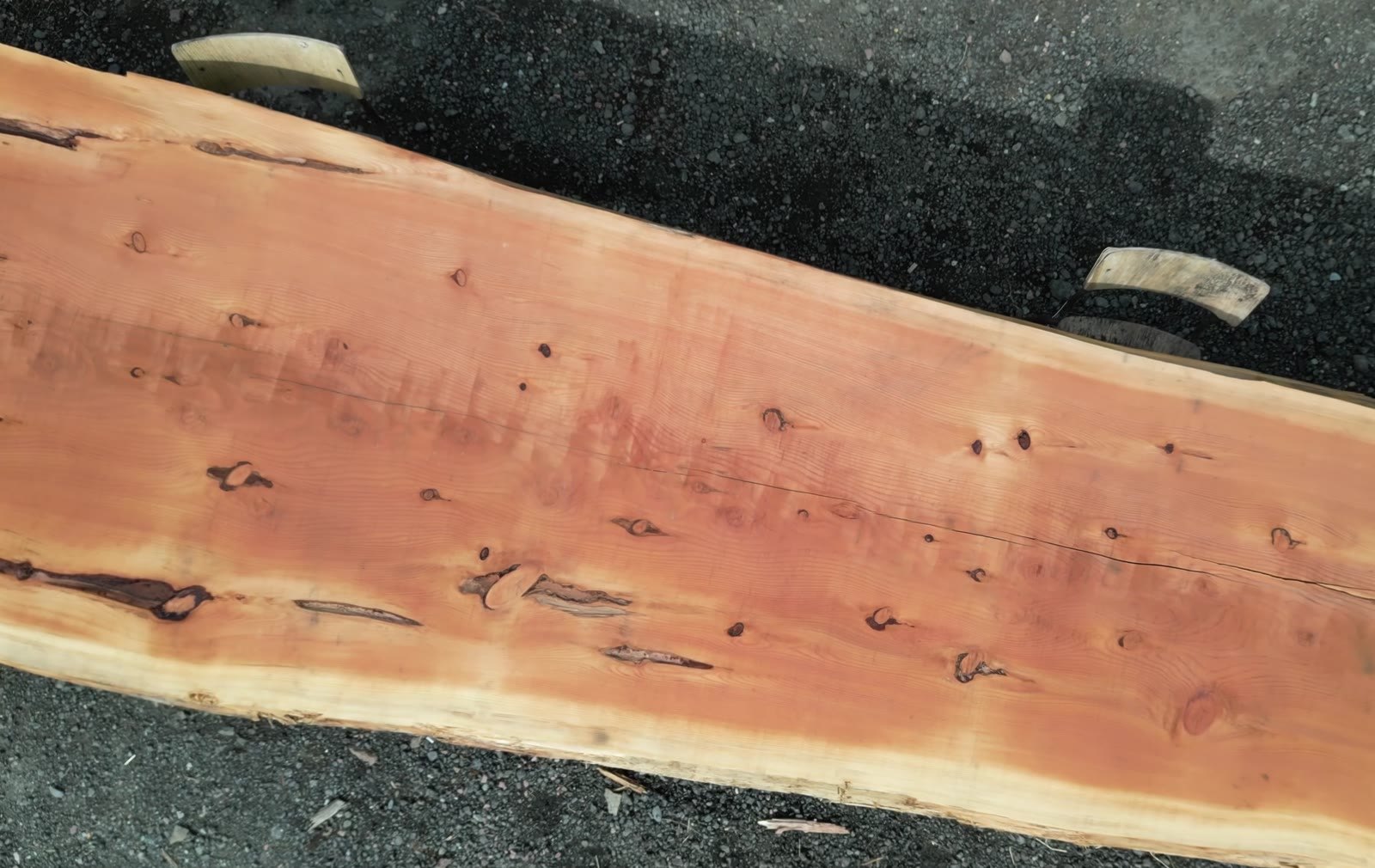
Send existing photographs of the log, its ends and the surrounding working space. Include its location, species if reliably known, and any recorded dimensions. Label estimates as estimates and unknowns as unknowns.
Tell the sawyer about known damage, previous use and any possible metal or other contamination. Do not move, climb onto or cut a log to gather information. Ask for a site visit where safe access or condition is uncertain.
Already put together a log record? Reuse it from 02 · Log.
What will they look at?
These questions explain the assessment conversation. They are not a grading checklist for deciding on your own that timber is safe or suitable.
Can the species suit the proposed job? What requirements will the maker or designer need to specify?
Could the log accommodate the pieces you need? Ask about length, diameter, taper and curvature, alongside the mill’s handling limits.
How might visible splits, decay, knots or damage affect the plan? What can only be understood after closer examination or sawing?
The Forestry Commission’s timber-market guidance explains how stem form, diameter and wood character influence possible products. Appearance valued by a furniture maker is not the same as demonstrated structural strength.
Keep the possibilities separate from the promises
Look beyond the outside
What becomes clearer
once the log is opened?
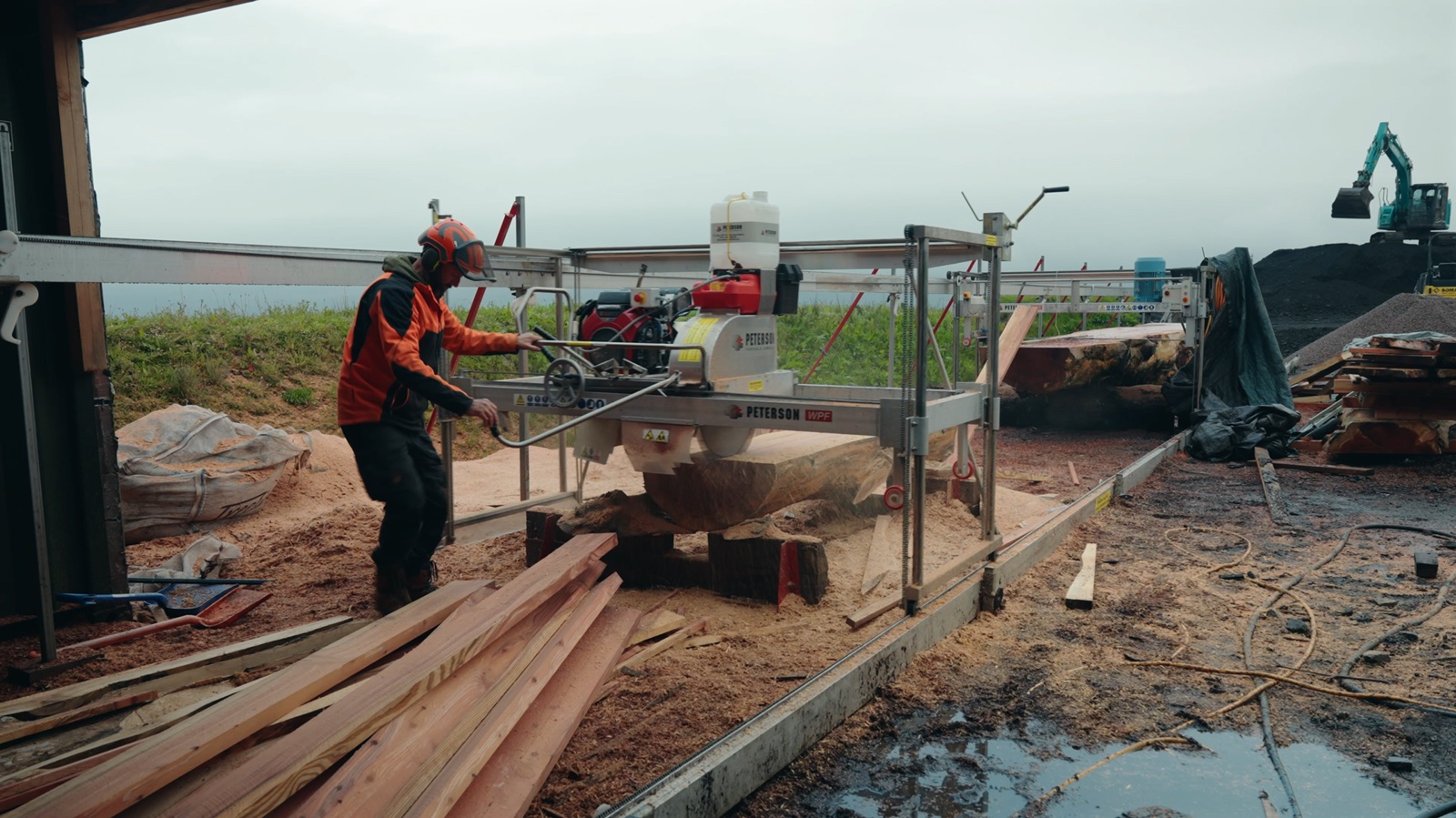
Ask the sawyer which pieces still suit your idea—and whether anything revealed during sawing changes the brief.
A large log does not promise a large finished piece
Ask which usable pieces the sawyer thinks are realistic, rather than treating the log’s outside dimensions as finished timber dimensions. Do not assume a fixed yield or selling price.
Metal and other contamination
Share any history of fencing, nails, wire or previous site use. Ask the operator how suspected contamination affects acceptance and inspection. A clean-looking surface or photograph cannot certify that a log is metal-free.
Timber for a structure
If the timber will carry loads, involve the designer or engineer before agreeing a cutting brief. The Forestry Commission guidance identifies strength grading as central to structural use. Milling a beam does not, by itself, establish that it meets the design requirements.
National Sawmills · Rhu and Linn Botanic Garden
Too large for one route? Explore another.
In our From ‘Unusable’ to Educational Legacy project account, we describe large Sequoia logs from development work in Rhu being milled on site by Grantland Timber, with National Sawmills’ support. The timber was intended for horticultural and educational spaces at Linn Botanic Garden.
If a mill cannot accept your log, ask why. Is the difficulty its size, its condition or getting it there? That answer helps you explore whether another sawyer or processing location could offer a workable route.
This project illustrates an option to investigate. It does not establish what your log will yield, what processing will cost or whether the resulting timber will suit your intended use.
Record the assessment outcome
Keep a short note of the proposed use, what the assessment has confirmed and what still needs checking. Then choose the next route.
Explore the original idea
If the sawyer sees a plausible route, agree what assessment is still needed and what the provisional cutting brief should contain.
Adapt the idea
Ask whether shorter pieces, a different finish or another product would better suit the material. You can change the brief before committing to the job.
Consider another use
If milling is unsuitable, ask about other options. 06 · Use explores these options.
Add any agreed timing, storage requirements or plant-health checks to the record before arranging movement. These depend on the species and circumstances.
Next in the journey · 04
Now plan the conversion
Once the initial assessment gives you a workable direction, discuss where sawing could happen, what pieces you will receive and what work will remain. Take the agreed brief into the next stage.
Want to discuss a potential milling job? Send us your idea and the information you already have.
Sources and editorial review
Written by Jerry Andrada. Forestry review: Nick Backhouse, BSc Hons Forestry. Sources checked for consistency on 7 October 2026. Author and reviewer acceptance confirmed on 7 October 2026.
- Forestry Commission: high-value markets for timber (29 April 2026). Supports the relationship between log characteristics, products and structural grading; not an individual log valuation.
- HSE: working with chainsaws. Competence and work-planning context; this page gives no cutting or handling instructions.
- National Sawmills: From ‘Unusable’ to Educational Legacy (10 April 2026). Company-reported Rhu milling project and intended Linn Botanic Garden use; no supplied measured assessment, yield or installed-use verification.
No machine-size limits, detection guarantees, universal storage periods, structural grades, timber prices or environmental savings are asserted. Individual logs need competent assessment. Photographs are original archive context, not proof of a project’s identity or timber performance.
About the author and forestry reviewer

Jerry Andrada
Author · Co-founder, National Sawmills Ltd
Jerry has approximately 17 years of practical experience, beginning with an apprenticeship in tree surgery at 18. His work has since spanned arboriculture, forestry, regenerative farming, timber extraction and timber conversion.
He acquired his first sawmill at 25 and has worked with portable bandsaw mills, dedicated slabbers and swing-blade sawmills, including contract sawmilling projects across the UK. Today, he is co-founder of National Sawmills Ltd and the UK representative for Peterson Portable Sawmills.
His contribution to these guides is practical: how timber can be accessed, extracted and converted at or close to its source, and what that involves in working conditions.
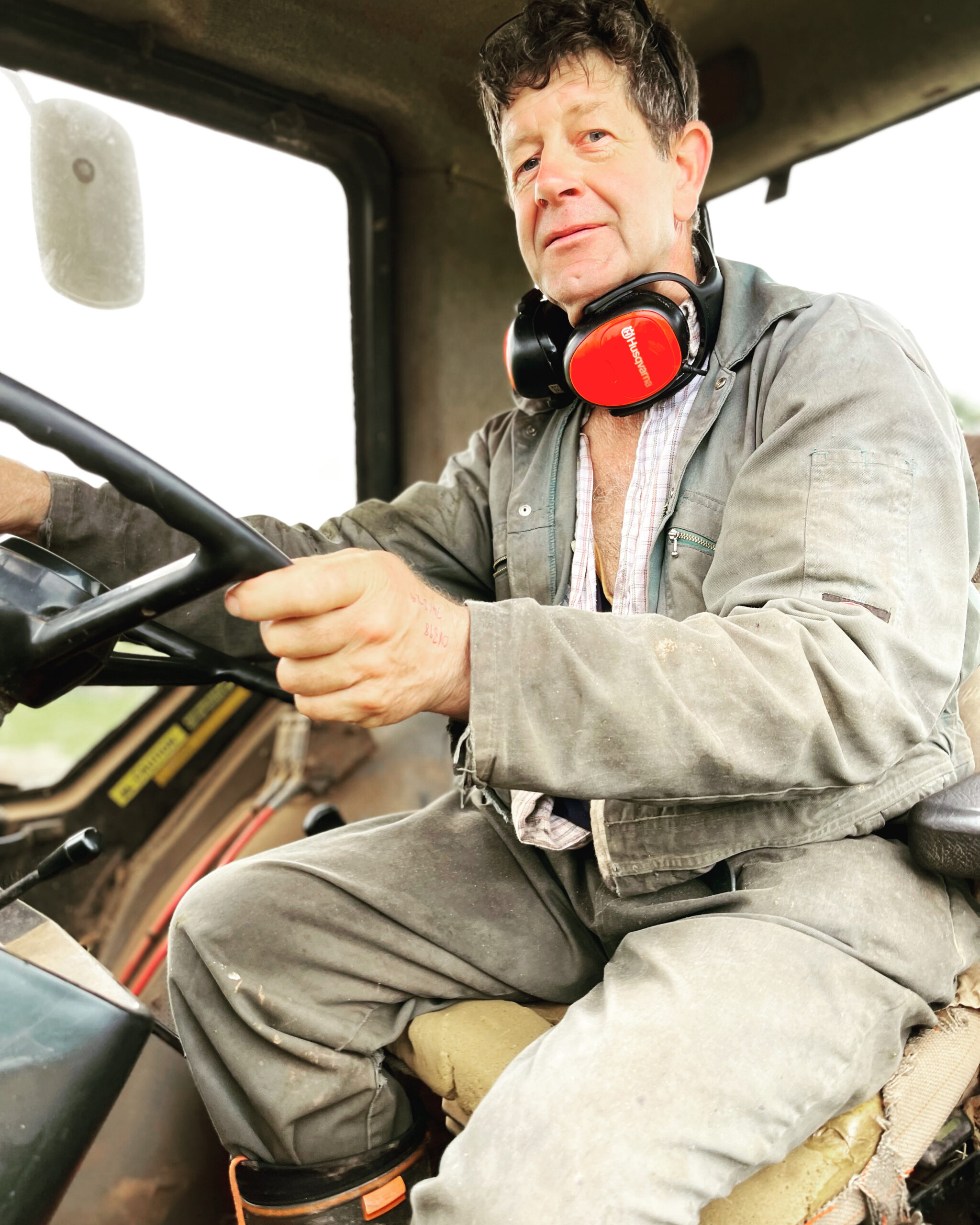
Nick Backhouse, BSc Hons Forestry
Forestry Reviewer · National Sawmills Ltd
Nick Backhouse graduated with a BSc in Forestry from University College of North Wales, Bangor, in 1989.
Following graduation, Nick applied his forestry education at Grantland Farm in Devon, integrating forestry and woodland management within an established working agricultural holding.
Woodland and agriculture have continued to be managed alongside one another at Grantland, giving Nick more than three decades of practical forestry experience within a working farm environment.
Nick also served as a Captain in the Devonshire and Dorset Regiment of the British Army, including service in Northern Ireland.
He now reviews National Sawmills’ educational content from the perspective of his formal forestry education and long-term practical experience at Grantland Farm.
Jerry Andrada and Nick Backhouse have approved the hub and all six guides. Author and reviewer acceptance confirmed on 7 October 2026. Individual trees, sites and intended timber uses still require their own assessment.