
What happens between
tree and sawmill?
Do you have a tree that is due to be felled, or one that is already down? Speak to a sawyer—a person who saws logs into timber. Share what you’d like to make, then agree the log lengths and how the work could happen.
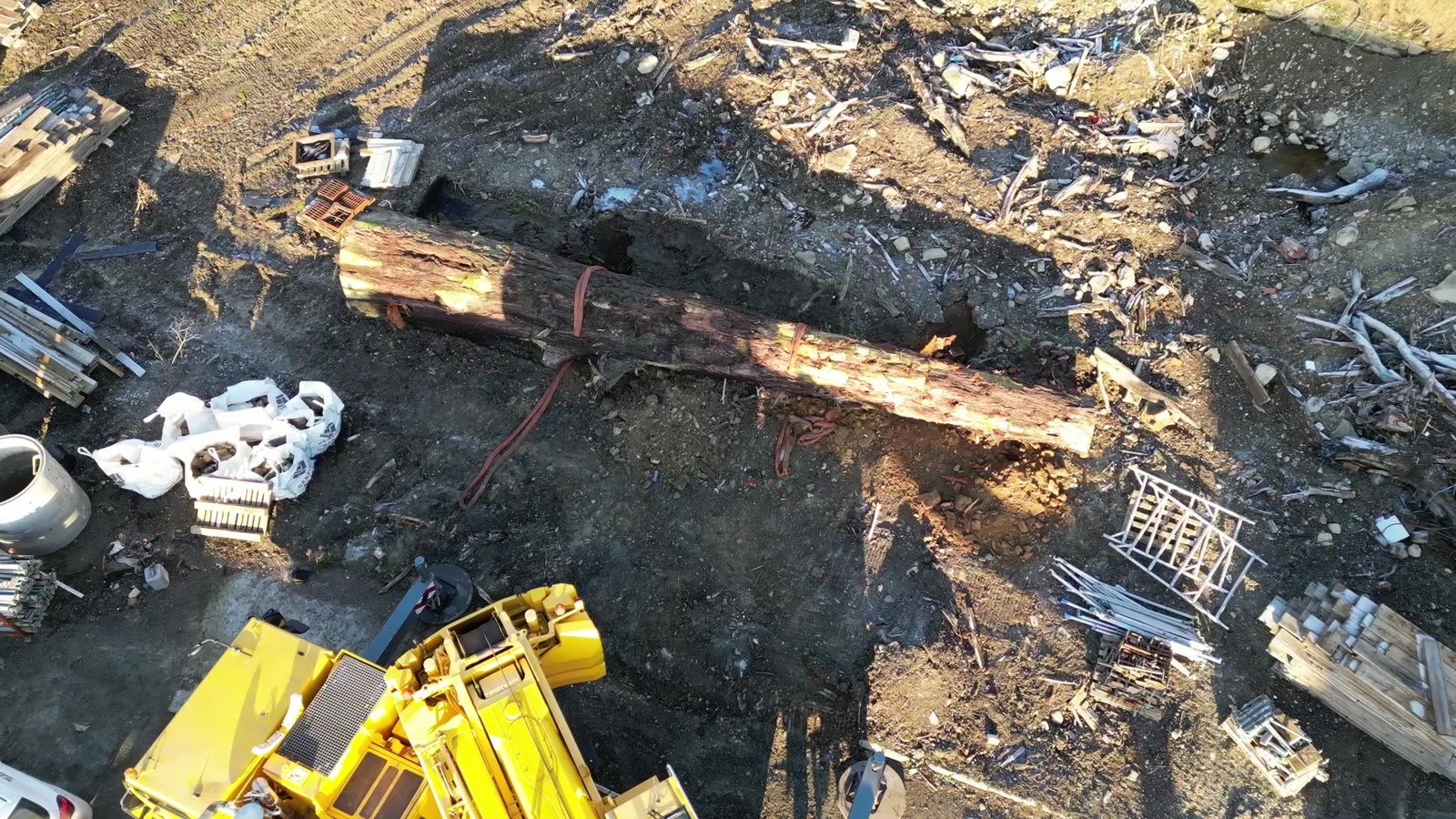
Plan the next move ↓Original National Sawmills archive footage: a log and working space. The image does not establish the tree’s identity or how it reached this position.
Three things to agree before booking
A log is a section of a tree stem. Before any cutting is agreed, bring the sawyer and tree-work contractor into the same conversation.
Share your idea
Send a sketch, reference photo or list of the pieces you need.
Discuss log lengths
Ask: “What lengths would suit the job?” The sawyer and contractor agree what is feasible.
Agree the handover
Who moves, loads and unloads the logs—or brings the mill to them? Confirm each responsibility.
If the management decision or permissions are unresolved, start with 01 · Tree. Work methods require competent planning: HSE guidance.
What information helps?
Length?Diameter or girth?Working space?Share any known dimensions with units, and say whether they are measured or estimated. Ask the sawyer what else they need.
Why log lengths need agreeing
There is no universal length for every project. Ask about accepted lengths, handling limits and trimming allowances. Safety and site constraints may limit the options; the competent contractor decides the method. The Forestry Commission harvesting guide explains matching stem sections to processing requirements.
Move the logs—or bring the mill?
Logs to the sawmill
Agree transport, loading and unloading. Ask what access and handling arrangements are needed.
Sawing at the site
Ask whether there is suitable working space and access. Logs and sawn pieces still need handling.
Let the site inform the choice
Send existing views of the entrance and surrounding space. A contractor may need a site visit.
04 · Conversion compares these options.
Site details worth mentioning
Gates, slopes, nearby services, public access and known ground conditions. Ask who is responsible at each handover; one booking may not cover every job. HSE site-management guidance covers public safety and emergency planning.
The finished piece can shape the brief
National Sawmills · Great Oak Table
Our published project account describes arranging milling and supplying timber for a table assembled from sections from one oak. It did not require one continuous slab spanning the whole finished table.
The useful question for the next job is: what are the individual components, and what log lengths would let the processor explore them? The account does not provide a measured extraction plan or a cutting schedule we can reuse.
Make a handover note
Keep the agreed log lengths, access arrangements and handling responsibilities together. Add existing photographs and label anything still unknown. This is the record to carry into assessment.
Where is it?
Location, owner and a reference for each log.
What do you know?
Species if known, recorded dimensions, damage and possible contamination.
What is the idea?
The pieces you hope to make and who will handle each stage.
Photos cannot establish hidden defects, metal-free timber or structural suitability. Those questions lead into 03 · Assessment.
If the tree is already down
Tell the adviser if it is storm-damaged, unstable or under tension. Arrange competent assessment before approaching or planning recovery. Ask about timing and storage for its species and condition; this page prescribes no recovery method or storage period.
Next in the journey · 03
Can this log meet the brief?
Send your idea, location and existing photos to a sawyer. In 03, explore what the log’s size and condition could mean for your project.
Continue to 03 · Assessment →Planning a processing job? Explore contract milling or discuss the material and site with us.
Sources and editorial review
Written by Jerry Andrada. Forestry review: Nick Backhouse, BSc Hons Forestry. Sources reviewed 7 October 2026. Author and forestry reviewer acceptance confirmed on 7 October 2026. The imagery illustrates the discussion rather than recording one tree’s complete journey.
- HSE: working with chainsaws—competence and work planning
- HSE: site management
- Forestry Commission: harvesting and processor requirements (2025)
- National Sawmills: Great Oak Table—company-reported project (2026)
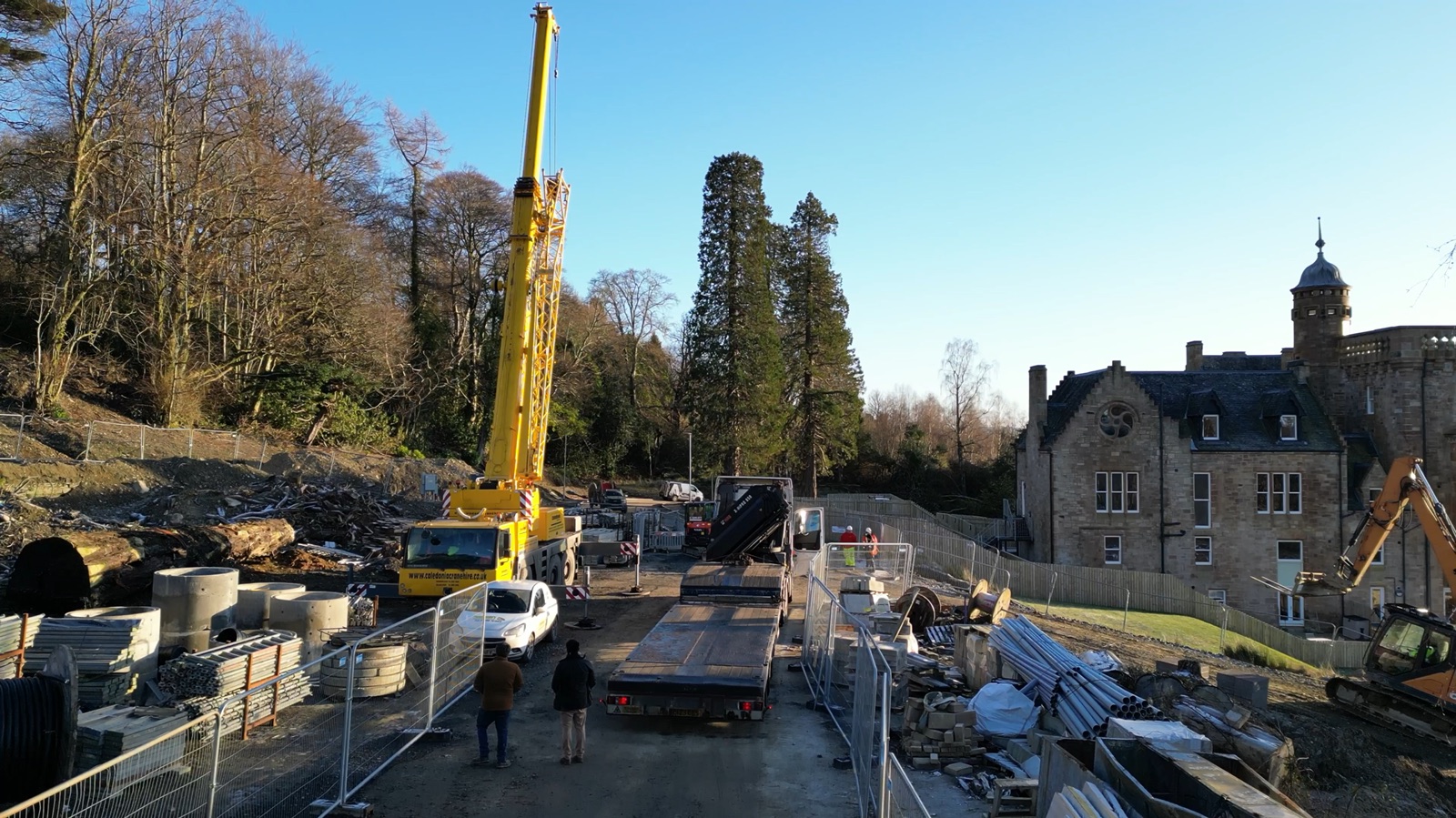
The two archive views illustrate log handling space and site context. They show different locations, rather than a documented journey of one tree. No dimensions, safe-working method, recovery or environmental advantage is inferred from them.
About the author and forestry reviewer

Jerry Andrada
Author · Co-founder, National Sawmills Ltd
Jerry has approximately 17 years of practical experience, beginning with an apprenticeship in tree surgery at 18. His work has since spanned arboriculture, forestry, regenerative farming, timber extraction and timber conversion.
He acquired his first sawmill at 25 and has worked with portable bandsaw mills, dedicated slabbers and swing-blade sawmills, including contract sawmilling projects across the UK. Today, he is co-founder of National Sawmills Ltd and the UK representative for Peterson Portable Sawmills.
His contribution to these guides is practical: how timber can be accessed, extracted and converted at or close to its source, and what that involves in working conditions.
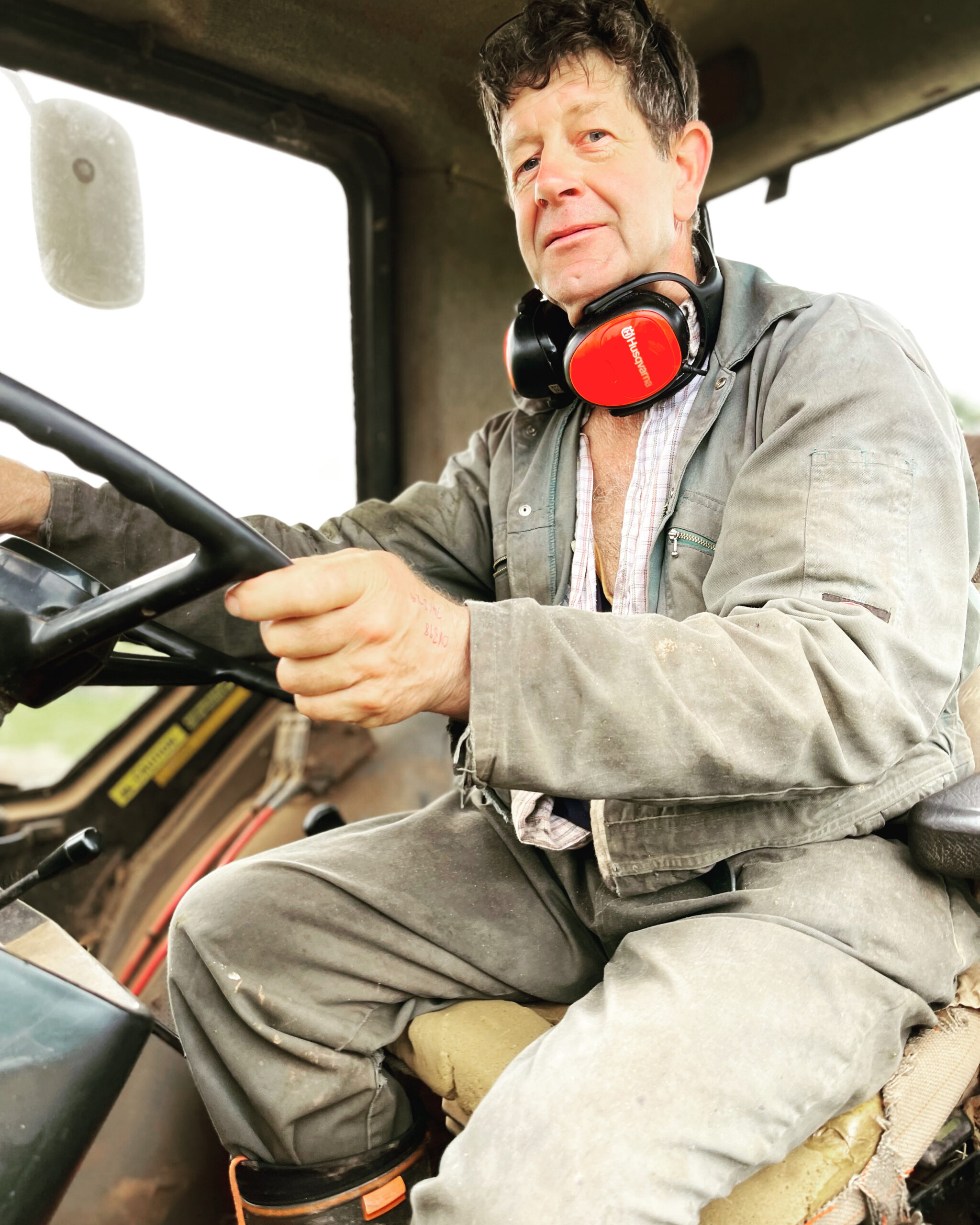
Nick Backhouse, BSc Hons Forestry
Forestry Reviewer · National Sawmills Ltd
Nick Backhouse graduated with a BSc in Forestry from University College of North Wales, Bangor, in 1989.
Following graduation, Nick applied his forestry education at Grantland Farm in Devon, integrating forestry and woodland management within an established working agricultural holding.
Woodland and agriculture have continued to be managed alongside one another at Grantland, giving Nick more than three decades of practical forestry experience within a working farm environment.
Nick also served as a Captain in the Devonshire and Dorset Regiment of the British Army, including service in Northern Ireland.
He now reviews National Sawmills’ educational content from the perspective of his formal forestry education and long-term practical experience at Grantland Farm.
Jerry Andrada and Nick Backhouse have approved the hub and all six guides. Author and reviewer acceptance confirmed on 7 October 2026. Individual trees, sites and intended timber uses still require their own assessment.