
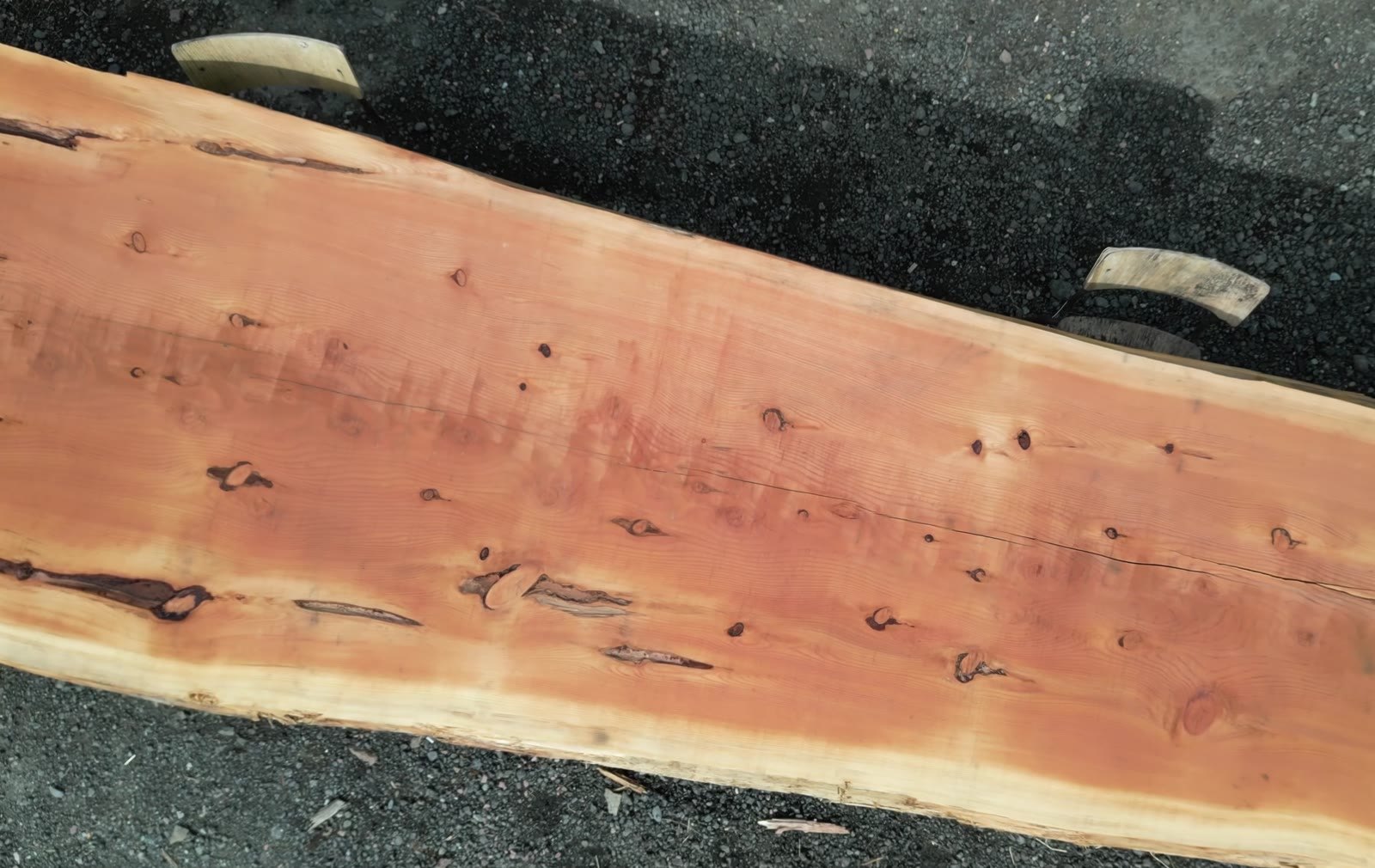
From a log.
To something useful.
What would you like to make from your timber? Start with the pieces your project needs, then explore where the sawing could happen and what work will remain afterwards. You can begin with an idea; the sawyer helps turn it into a cutting brief.
Explore timber conversion ↓Freshly exposed timber from National Sawmills’ original archive footage.
Conversion turns logs into sawn pieces. What happens next depends on their intended use: drying, grading and making each have a part to play.
From tree to useful timber
Timber conversion means sawing logs into boards, beams or other sawn pieces. It changes the material’s form. Drying, grading and making are separate stages, needed according to the intended use.
A planning overview, not instructions for tree work. See the UK Forestry Standard and HSE’s guidance on competence and training.
Start with the use. Then assess the log.
Tell the sawyer what you hope to make. For example, a sketch, photograph of a similar project or list of finished sizes can help. Character boards for furniture and a specified load-bearing beam need different things from the timber; the intended use gives the cutting conversation a direction.
Species, measured dimensions, shape, condition and any known damage or contamination.
Your project idea, any required sizes and who will use or specify the timber. Mark anything still undecided.
Access to the mill, movement of sawn pieces and somewhere suitable to store them.
Some defects or metal may only become apparent once a log is opened. Therefore, estimates of output need to allow for that uncertainty. The Forestry Commission explains how log quality and markets affect product choices.
Move the logs, or bring the mill?
Ask for the whole job to be explained: who handles and transports the material, where it is sawn, and what remains afterwards. You can then compare the routes against your project.
Route A
Logs → sawmill
For example, a fixed site may suit the material and required products. First, check accepted species, log sizes and volumes, available drying or machining, and loading and delivery arrangements.
Route B
Mill → logs
By comparison, near-source processing needs suitable access, handling space and storage. Also check the operator’s equipment limits, travel and setup, and any later movement of the timber.
However, an oversized stem or awkward site makes this comparison useful; it does not automatically make a portable mill the better choice. Both routes feature in Forestry Commission guidance.
An oak with a purpose
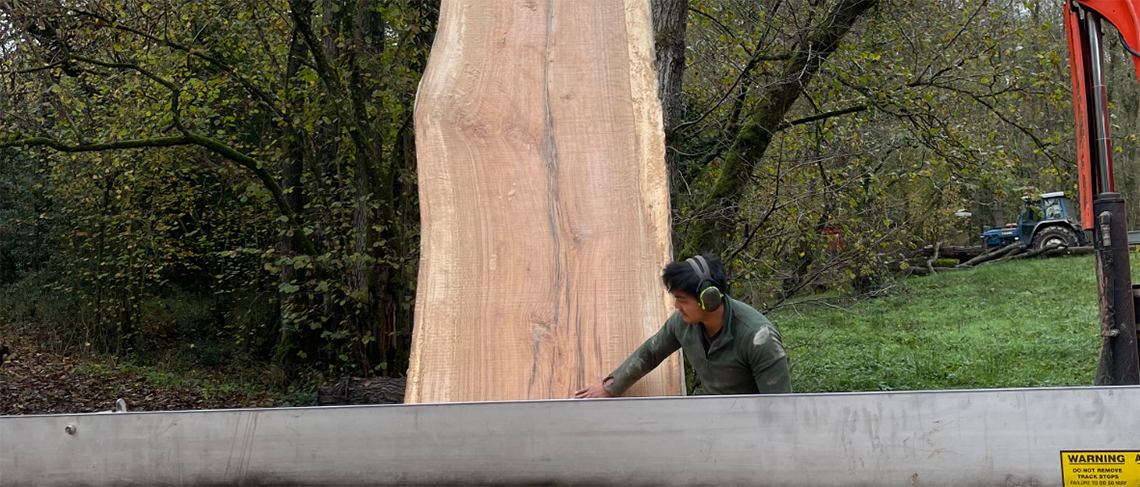
The Great Oak Table
Our project account describes arranging the conversion of an oak for table components. In this case, the table was assembled from sections, rather than one continuous slab.
Reported project: National Sawmills arranged milling and supplied the timber; the table used separate components from one oak. Not recorded here: matched log-input and finished-output measurements, or a verified recovery percentage. Therefore, for a new job, agree the component lengths, widths and thicknesses with the maker before planning the cuts. The ten-photo measurement sequence below shows different jobs. It explains a method; it does not document this oak from standing tree to finished table.
Our company story describes practical experience with different milling systems. Here that experience sits alongside public guidance, with each project’s outcome kept specific to its material and use.
What counts as usable output?
A stack of fresh boards and timber ready for a finished product are different measures. First, define which one you mean before comparing recovery figures.
Schematic only: shapes do not represent quantities or a recovery percentage.
Then use compatible volume measurements and state the stages compared. However, a sawyer can give a qualified estimate, but no single percentage predicts every log.
Understand the measurements
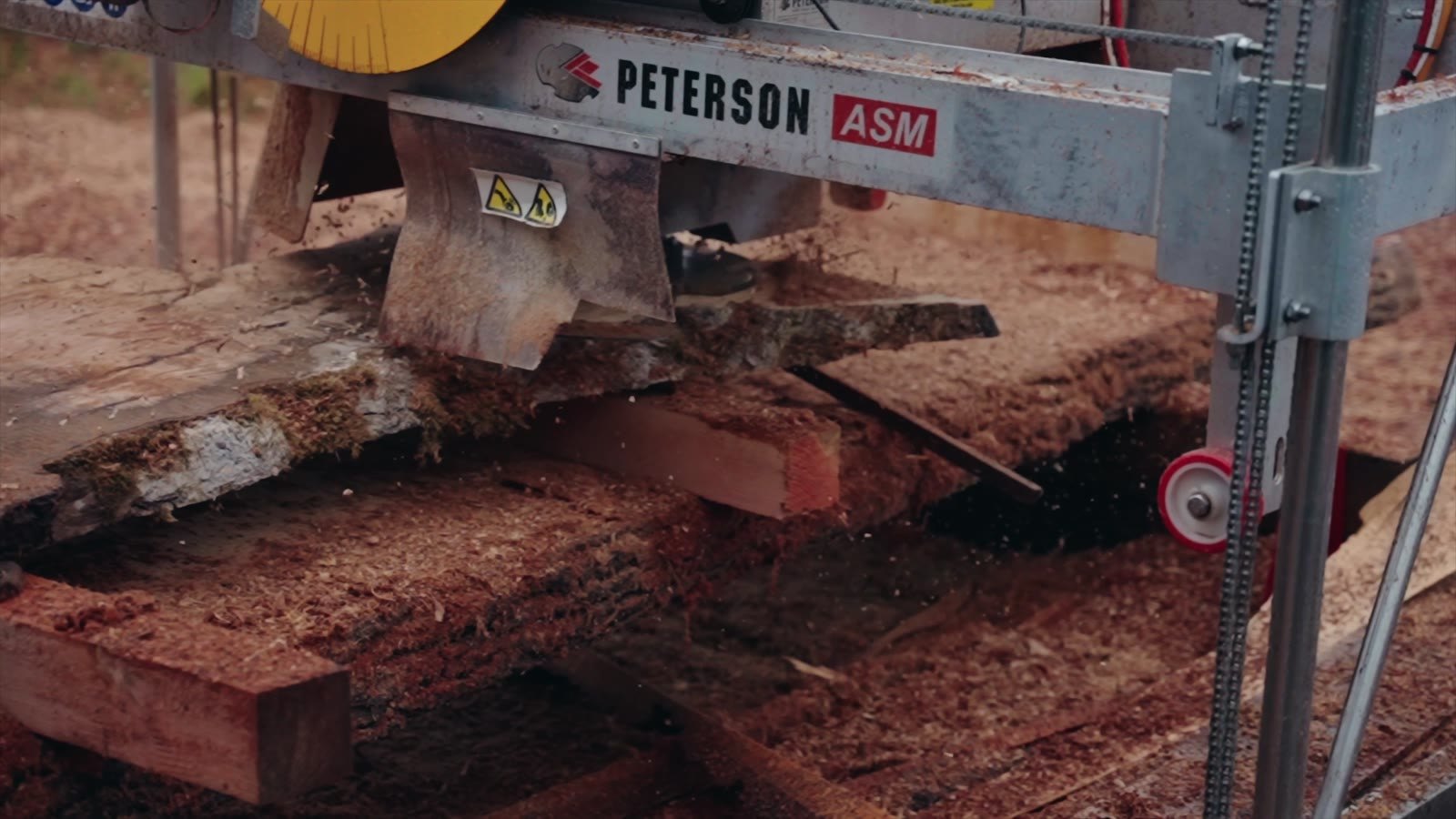
Log volume describes the input; sawn volume describes what comes out. For example, these ten illustrated photo slides explain the difference. Slides 2–5 show a Hoppus example, a traditional log measure—not a prediction of usable boards.
Start with the finished piece
Write down the lengths, widths and thicknesses the project needs before agreeing a cutting plan. However, a log-volume estimate helps describe the input; it does not promise the number of usable boards.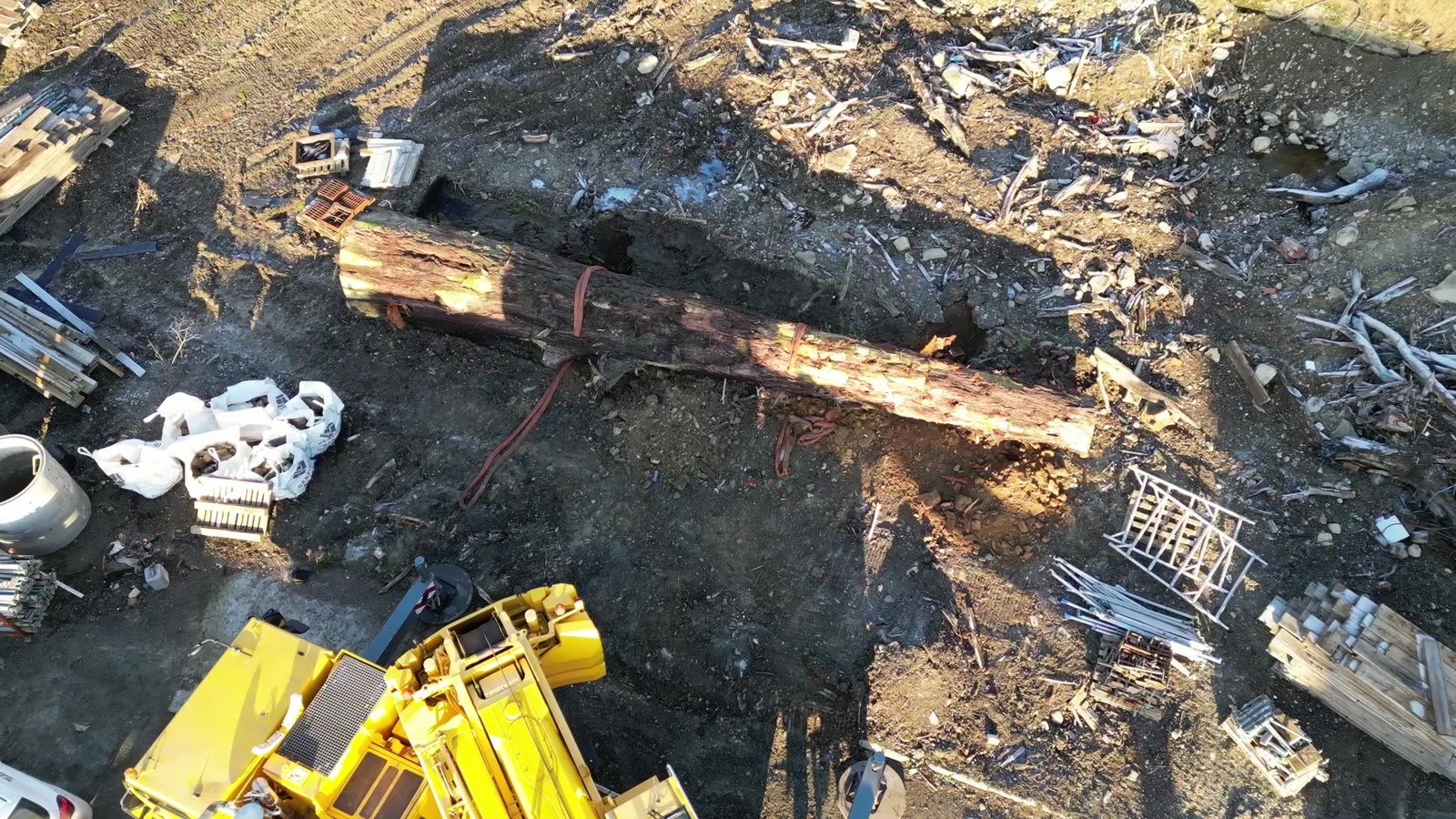
Hoppus · 1. Record the measurements
Measure the log’s length in feet and its girth (circumference) at the midpoint in inches. Also agree the bark allowance and measurement convention with the buyer. Our illustrative example uses an agreed girth of 48 in and length of 12 ft.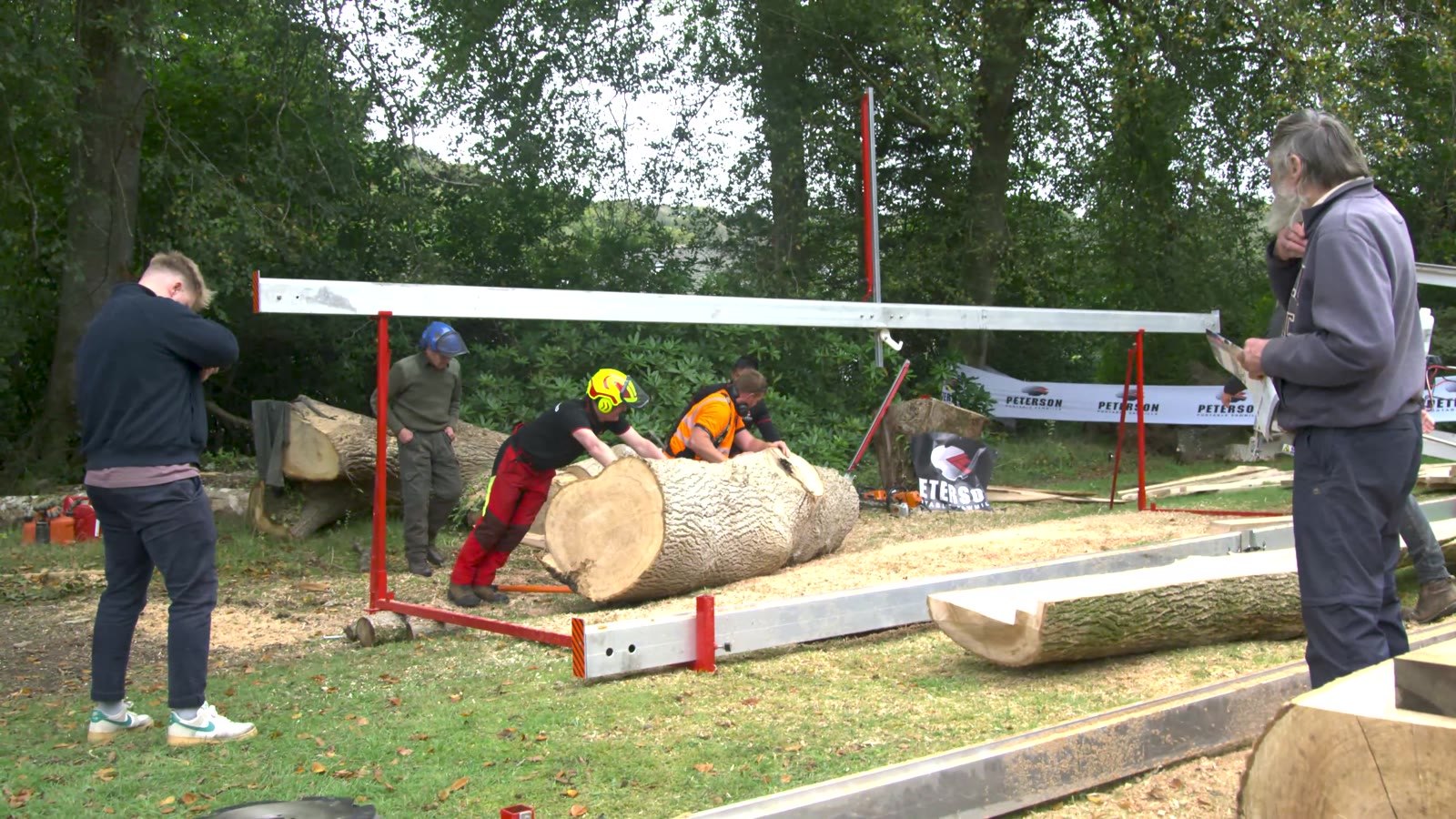
Hoppus · 2. Find the quarter-girth
Next, divide the agreed mid-girth by four. For the example: 48 ÷ 4 = 12 inches. Use circumference around the log, rather than its diameter across the end.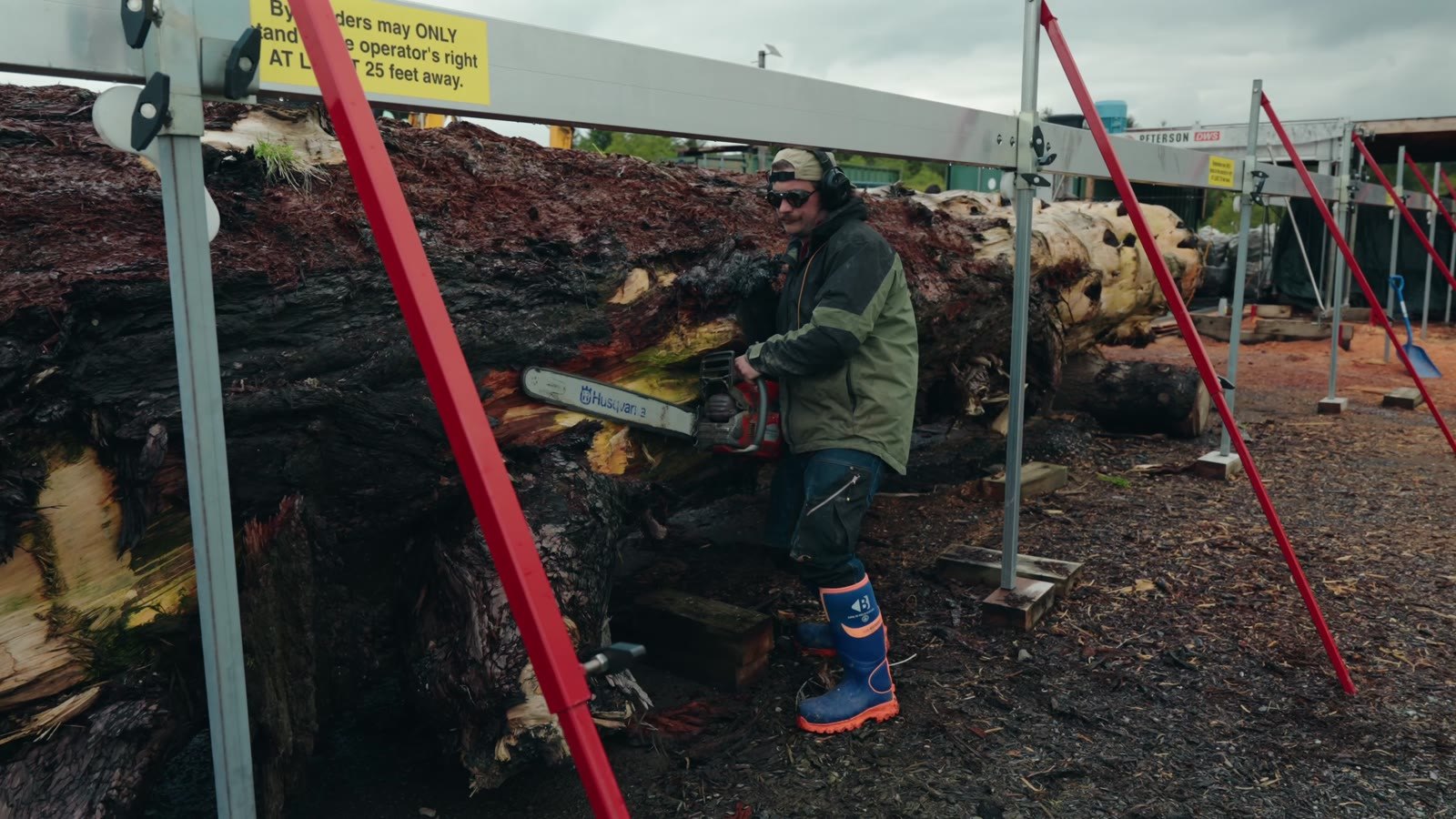
Hoppus · 3. Square it and multiply
Then multiply the quarter-girth by itself, then by the length in feet: 12 × 12 × 12 = 1,728. Keep the quarter-girth in inches and the length in feet for this formula.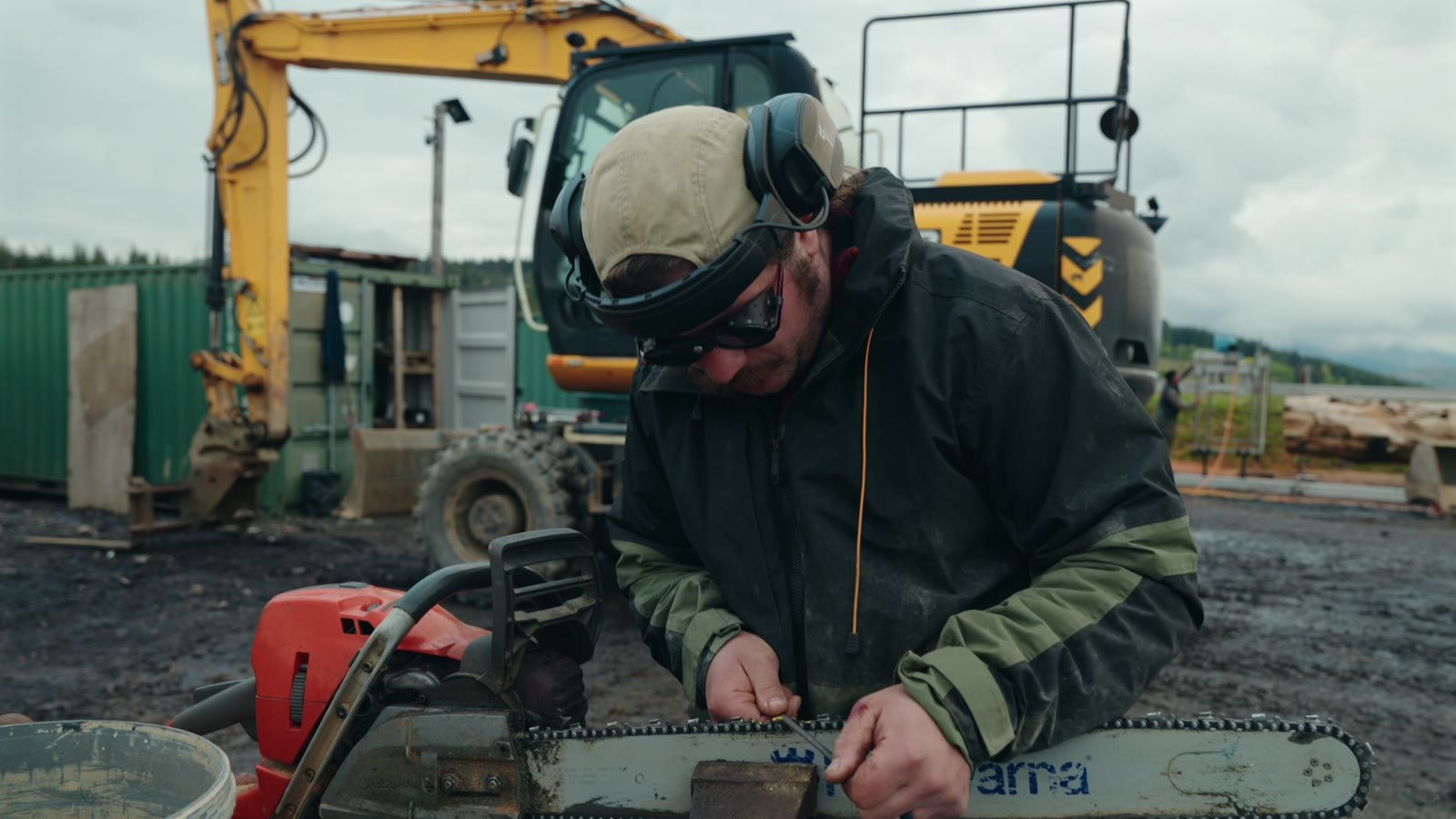
Hoppus · 4. Divide by 144
1,728 ÷ 144 = 12 Hoppus feet. The formula is (girth in inches ÷ 4)² × length in feet ÷ 144. Hoppus is a traditional trade measure, distinct from true cubic feet and actual sawn output.A metric alternative · log volume
A mid-diameter estimate is V = π × (d ÷ 2)² × L, with diameter and length in metres. For d = 0.40 m and L = 3 m, V ≈ 0.377 m³. However, taper and irregular shape affect the estimate; record the bark basis.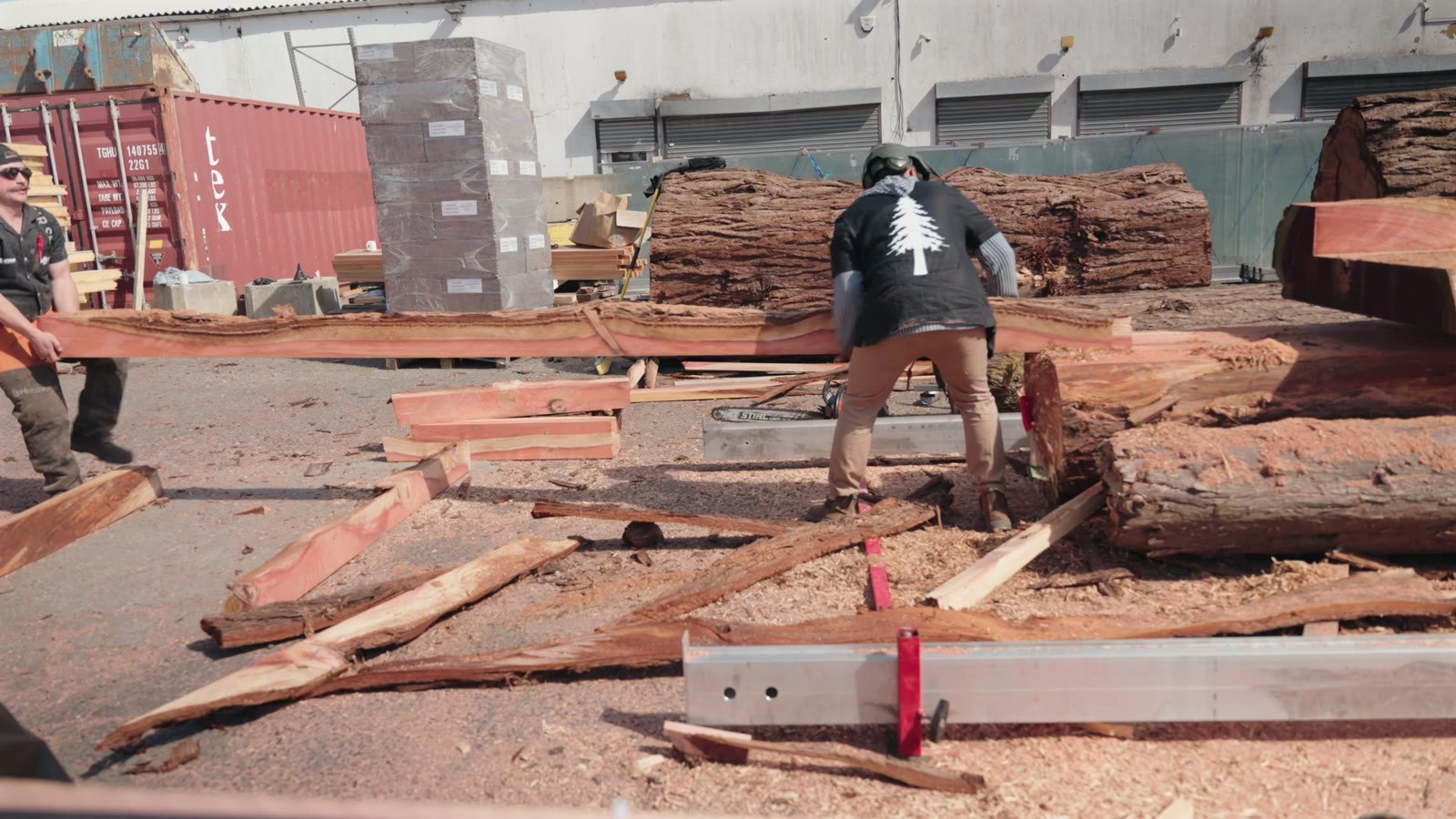
Measure the sawn timber itself
By contrast, for a rectangular board, volume = thickness × width × length, all in metres. A 30 mm × 200 mm × 3 m board is 0.030 × 0.200 × 3 = 0.018 m³. Therefore, twenty identical boards total 0.360 m³.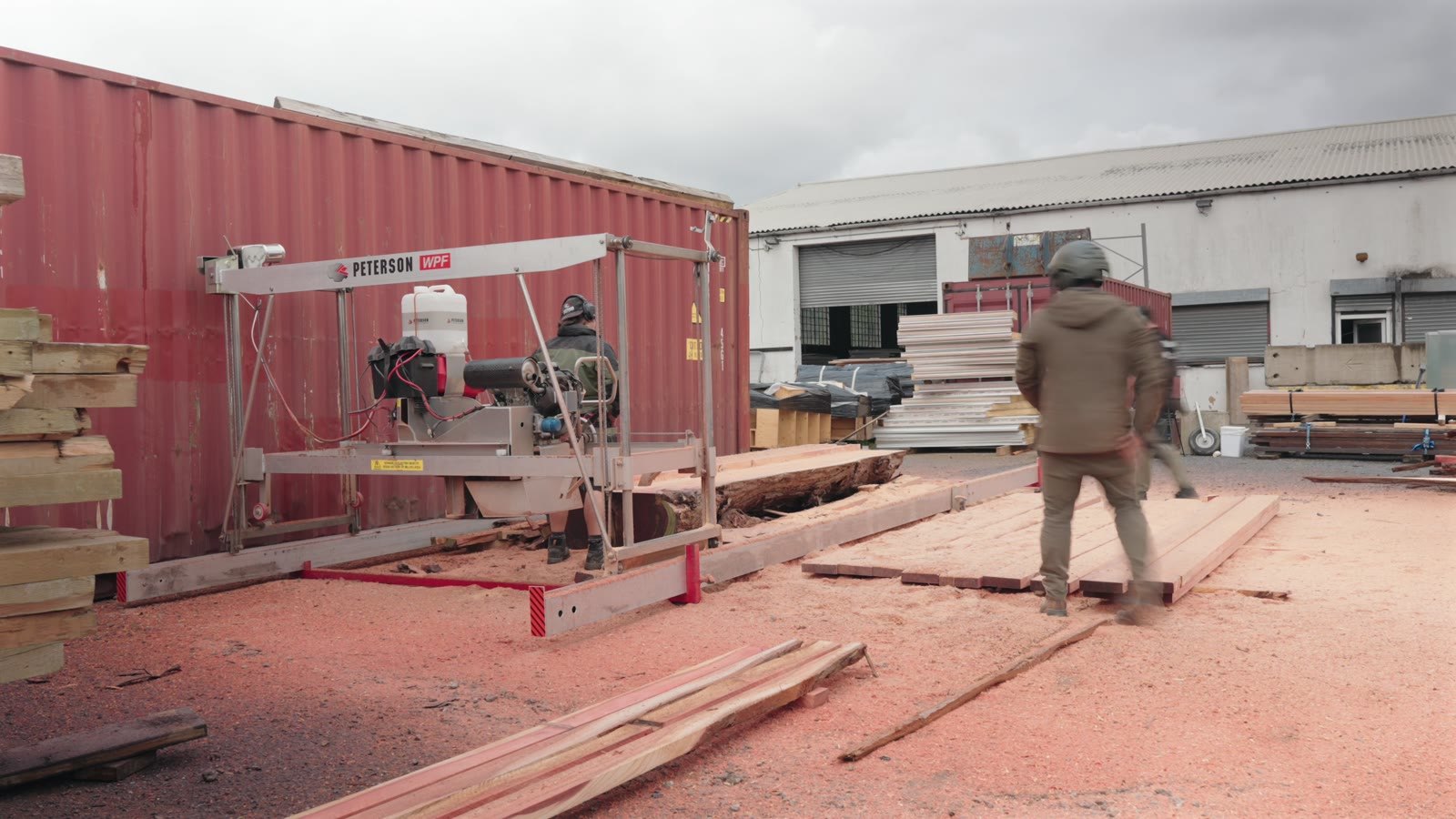
Compare input with useful output
Recovery means comparing a defined sawn output with measured log input on a compatible volume basis. Saw cuts, edging, defects and the cutting brief affect the result. For this reason, do not divide cubic metres of boards directly by Hoppus feet.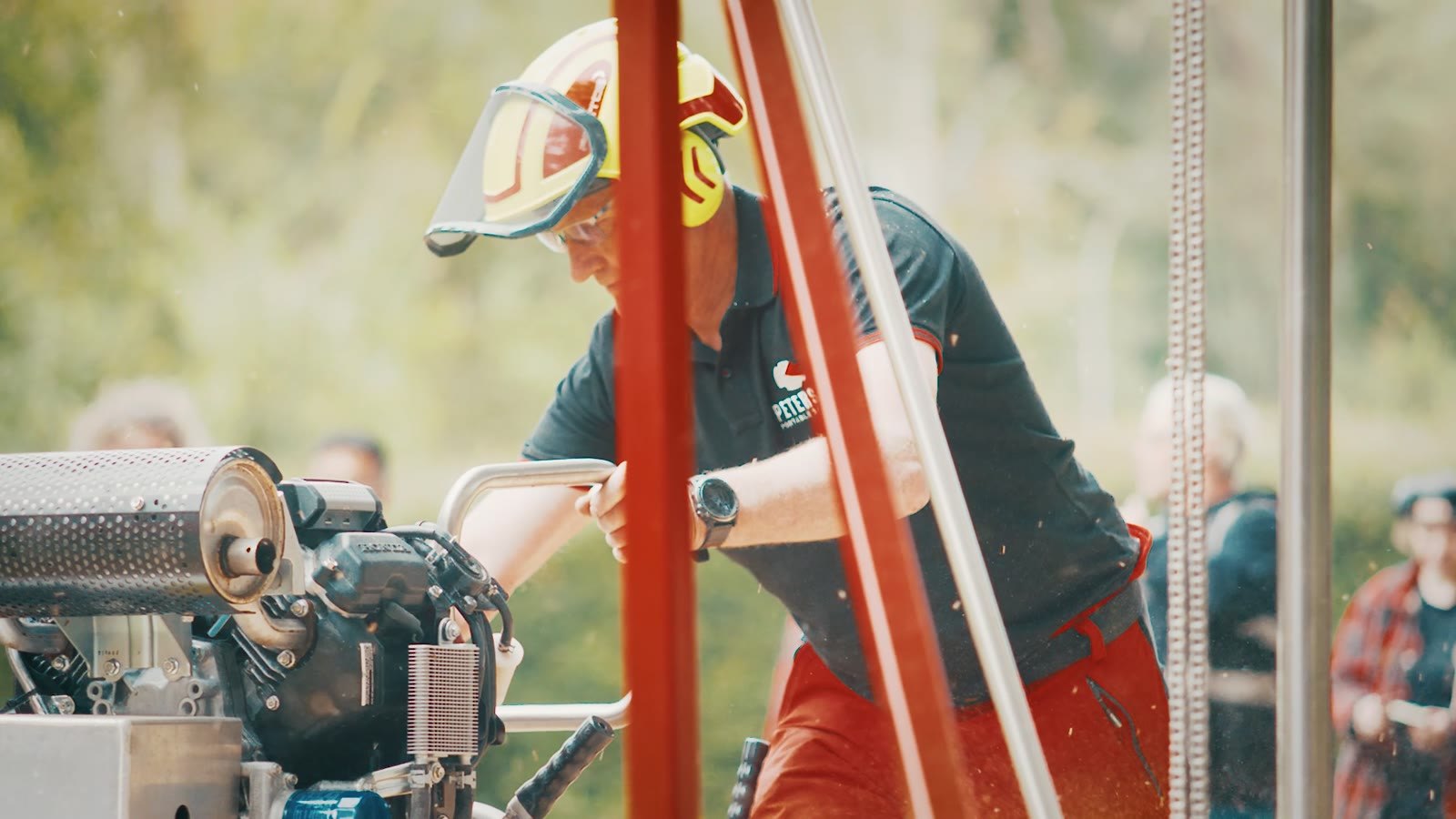
Appearance is not a strength grade
Knots, splits and grain can inform product selection, but a photograph cannot establish structural suitability. Instead, structural timber needs the appropriate grading route: visual strength grading by a qualified grader, or machine grading. Agree the required specification with the designer.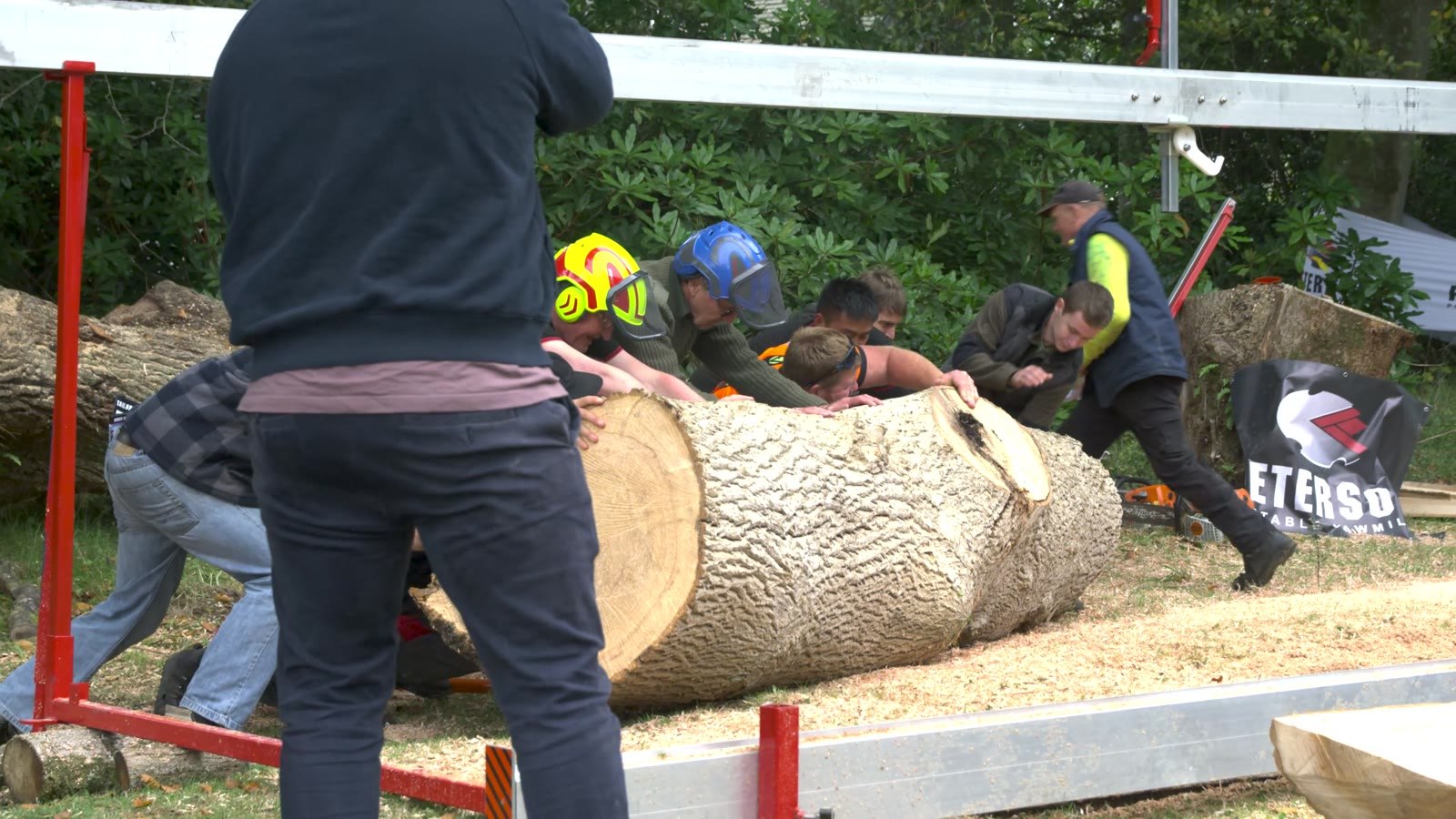
Keep a record for the next stage
Finally, label pieces and record species if known, dimensions, quantities, condition and intended use. The next question is preparation: what drying, storage, grading or machining does this project require? Measurements used above are examples, not dimensions taken from these photographs.Photographs are stills from National Sawmills’ original archive footage, showing different jobs. Transparent diagrams explain the measurements and decisions; they are not records of the photographed logs. The calculations are illustrative; they do not measure or grade the timber shown. Hoppus formula: USDA Forest Products Laboratory, A Collection of Log Rules, p. 42. Metric measurement: Forest Research. Strength grading: Forestry Commission.
What will the sawn pieces need next?
Ask the maker or drying specialist what moisture condition the intended use needs, and where the pieces can be stored. For example, species and sizes affect the route.
Involve the designer and a competent grader or engineer. However, size and appearance alone do not establish structural suitability.
Ask what still needs machining, how it will be delivered and who takes on each remaining job.
For example, some designed applications use green timber. That decision belongs with the specification. See Forestry Commission guidance on local timber and its 2026 construction-timber discussion. The 2016 guide’s regulatory references need checking against current requirements.
When another route makes sense
Reconsider milling if there is no likely user, the material cannot meet the brief, or handling and later processing cannot be arranged. Instead, another processor, another material use, or retention for habitat may fit the circumstances better.
Processing nearby does not by itself prove an environmental advantage. Therefore, compare extraction, transport, processing, recovery, drying, residues and final use with the alternative.
Leave with a cutting brief
Bring together the intended pieces, their provisional sizes, the chosen processing location and who handles the material. Then separate confirmed requirements from estimates. Record how log input and sawn output will be measured if you want to compare recovery.
Before agreeing the job, ask: “What will I receive after sawing, and what will it need before I can use it?” That answer is your starting brief for 05 · Preparation, which you can explore next.
Explore contract milling for a processing job, or a demonstration if your ongoing work may justify owning a mill.
Discuss your timber projectSources and timber terminology
Written by Jerry Andrada. Forestry review: Nick Backhouse, BSc Hons Forestry. Editorial scope reviewed 7 October 2026. Public guidance supports the explanation; company accounts describe particular experience. Author and forestry reviewer acceptance confirmed on 7 October 2026.
Roundwood: wood in its round form. Sawlog: a log intended for sawing. Sawn timber: pieces produced by sawing logs. Green timber: fresh or unseasoned material. Recovery: a defined sawn output compared with measured log input.
- Forest Research glossary
- UK Forestry Standard, fifth edition (2023)
- Forestry Commission: harvesting and marketing (2025)
- Forestry Commission: high-value timber markets (2026)
- Sourcing and specifying local timber, Ivor Davies (2016)
- HSE: working with chainsaws
- National Sawmills: Great Oak Table (2026)
- National Sawmills: company
About the author and forestry reviewer

Jerry Andrada
Author · Co-founder, National Sawmills Ltd
Jerry has approximately 17 years of practical experience, beginning with an apprenticeship in tree surgery at 18. His work has since spanned arboriculture, forestry, regenerative farming, timber extraction and timber conversion.
He acquired his first sawmill at 25 and has worked with portable bandsaw mills, dedicated slabbers and swing-blade sawmills, including contract sawmilling projects across the UK. Today, he is co-founder of National Sawmills Ltd and the UK representative for Peterson Portable Sawmills.
His contribution to these guides is practical: how timber can be accessed, extracted and converted at or close to its source, and what that involves in working conditions.
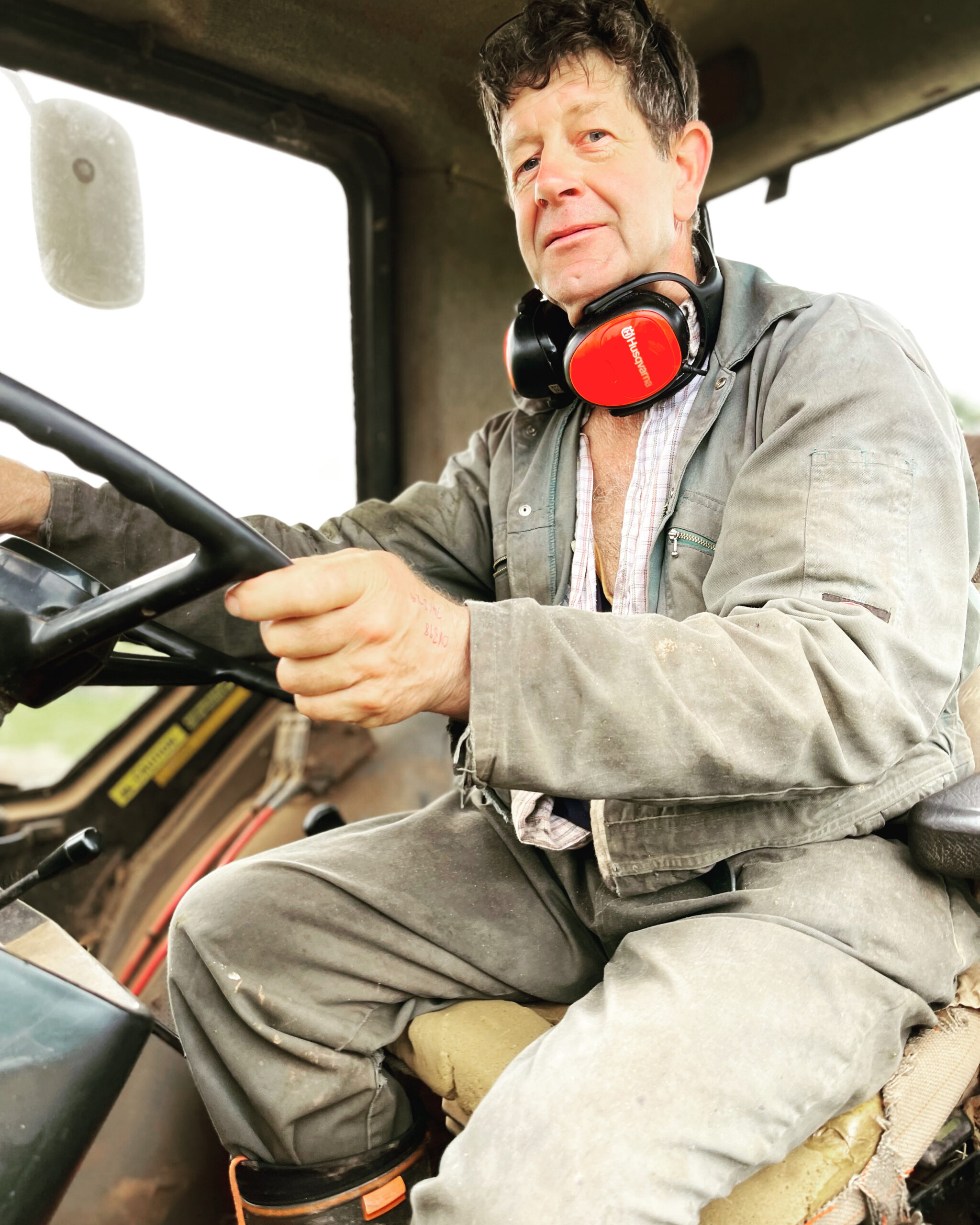
Nick Backhouse, BSc Hons Forestry
Forestry Reviewer · National Sawmills Ltd
Nick Backhouse graduated with a BSc in Forestry from University College of North Wales, Bangor, in 1989.
Following graduation, Nick applied his forestry education at Grantland Farm in Devon, integrating forestry and woodland management within an established working agricultural holding.
Woodland and agriculture have continued to be managed alongside one another at Grantland, giving Nick more than three decades of practical forestry experience within a working farm environment.
Nick also served as a Captain in the Devonshire and Dorset Regiment of the British Army, including service in Northern Ireland.
He now reviews National Sawmills’ educational content from the perspective of his formal forestry education and long-term practical experience at Grantland Farm.
Jerry Andrada and Nick Backhouse have approved the hub and all six guides. Author and reviewer acceptance confirmed on 7 October 2026. Individual trees, sites and intended timber uses still require their own assessment.