
Meet the National Sawmills team and learn who handles machine orders, delivery, customer support and operations. Our backgrounds include farming, forestry and practical milling. We represent Peterson Portable Sawmills in the UK. For help with a machine or timber project, contact the team.
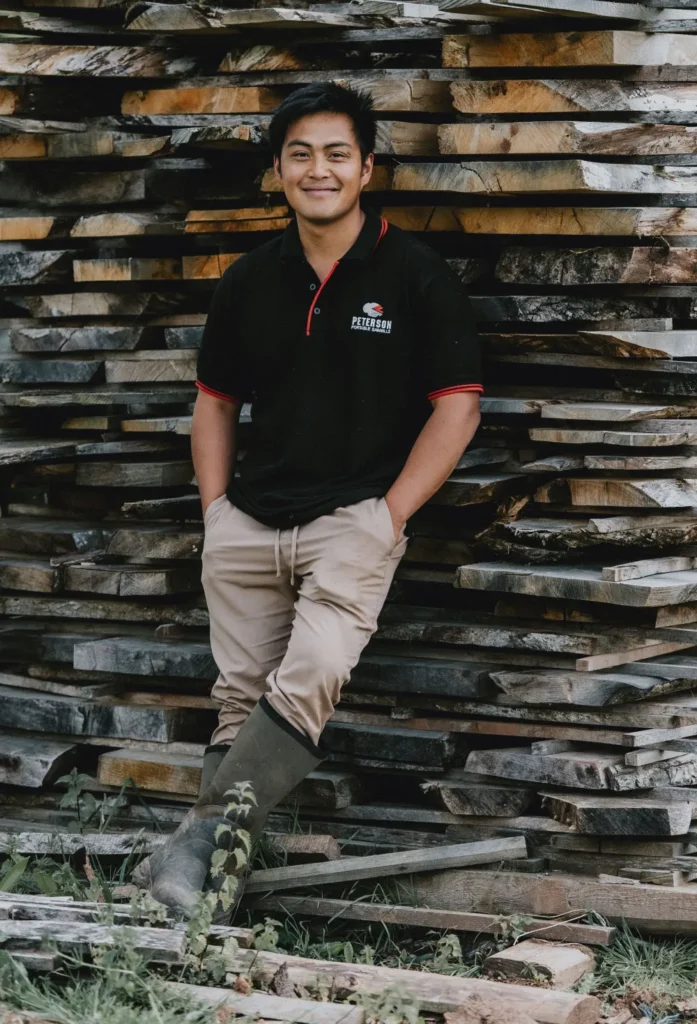
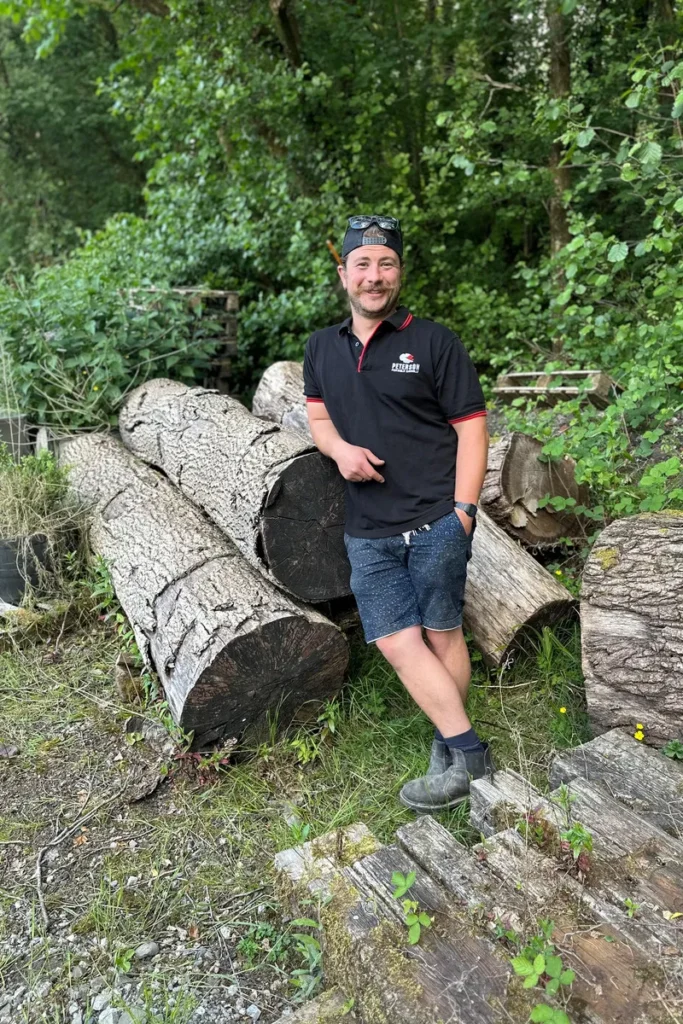
I’m based in South Wales and most of my background is in practical forestry, fabrication, and building things from timber. I’ve always been more interested in making and solving problems than talking about them.
I started using portable sawmills through my own work, processing timber for structural projects, outdoor builds, repairs, and one-off pieces. Much of that work takes place where access is limited and things rarely go to plan. You learn quickly that equipment needs to be reliable, simple, and backed by proper support. When something goes wrong on a remote site, delays matter.
That experience shapes my role in the National Sawmills team. My focus is on ongoing customer support. Once a machine arrives, I’m the person customers speak to for setup, troubleshooting, parts, and practical advice. Whether it’s helping someone get started, sourcing components, or working through problems in the field, the goal is to give operators confidence and backup after the initial purchase.
When Jerry and I started working together, customers showed us how much they valued ongoing support. National Sawmills was built around clear communication, practical knowledge, and long-term support from people who use the equipment themselves.
I’m particularly interested in helping farmers, woodland owners, and small rural businesses use suitable timber for their own projects. Portable sawmilling can be one option, depending on the logs, intended products and full processing costs.
When I’m not working with customers, I’m usually in the workshop building, fixing, or experimenting with new ideas — often all at once.
Eve Jenkins brings a different kind of backbone to National Sawmills.
She spent over 20 years as an accounts manager within the NHS, working across multiple trusts and dealing with the financial realities of large, complex systems. It’s a role that demands accuracy, accountability, and the ability to make sense of moving parts that most people never see.
But after two decades, she stepped away.
Not to slow down — but to build something more tangible.
Eve made the decision to move into farming and forestry, shifting from managing systems on paper to being part of them on the ground. She has been developing her knowledge through hands-on training at the Apricot Centre in the South Hams, focusing on regenerative approaches and how farming and forestry can work together rather than separately.
At Grantland Farm, she plays a key role in shaping that direction.
Encouraging more regenerative methods, engaging with people locally who are interested in forestry and farming, and helping bridge the gap between those who are curious and those already doing the work.
Within National Sawmills, Eve operates in a strategic and administrative capacity.
She supports the financial structure of the business, ensuring stability behind the scenes, while also maintaining customer relationships — making sure conversations don’t just start, but continue.
She isn’t front and centre. And that’s deliberate.
Because businesses like this don’t run on noise. They run on people who keep things moving, keep things grounded, and make sure what’s being built actually holds together.
And that’s exactly where Eve sits.
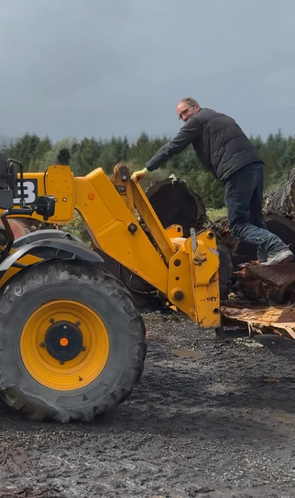
Mike’s background isn’t in timber. It’s in logistics.
He started out in large-scale haulage across Scotland — moving heavy loads through some of the most difficult terrain in the UK. From the Central Belt to the Outer Hebrides, and routes stretching the length of the country, he built an understanding of geography that you don’t get from a map.
You get it from doing the miles.
That experience matters.
Because one of the biggest failures in the timber industry isn’t the lack of resource — it’s the distance between where timber grows and where it gets processed. Mike has spent years operating inside that gap.
Now, he’s on the other side of it.
Mike runs the ASM / Dedicated Wide Slabber (DWS) combination — working directly with oversized timber across Scotland. This isn’t standard production. It’s irregular material, large diameter logs, and situations where yield is either captured properly or lost entirely.
That’s where his focus sits.
Understanding how to break down timber efficiently, maximise return from each log, and make difficult material viable — particularly in regions where transport alone can wipe out its value.
Within National Sawmills, Mike is your point of contact for Scotland north of the Central Belt, as well as Northern Ireland.
He understands the ground, the distances, and the realities of working in those areas.
Not in theory — but in practice.
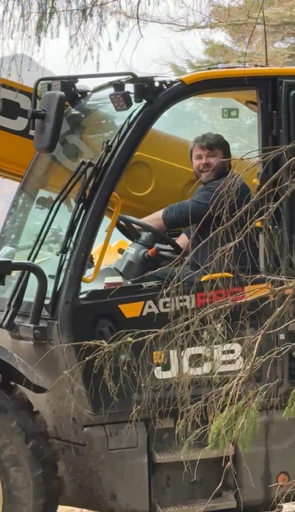
Thomas Wilson operates where most people don’t.
His background is in logistics at a level that requires more than just moving things from A to B. He has worked on contracts with the Ministry of Defence, major utilities, and clients across Scotland where discretion isn’t optional — it’s expected. Results matter, and they have to be delivered without noise.
That’s the standard he works to.
But Thomas isn’t just logistics. He’s a catalyst.
He works closely with Matthew at Linn Botanical Gardens — a relationship that ultimately led to one of the most important projects behind National Sawmills’ presence in Scotland. (See Linn Botanical Gardens £3 million project case study)
That project didn’t start with a polished proposal.
It started with a phone call.
At 4am.
Missed.
Returned at 8am to a simple question:
“We’ve got oversized timber that needs processing — can you do it?”
Usually, when people say that, it’s exaggerated.
In this case, it was the opposite.
What was framed as a straightforward sawmilling job quickly turned into something far bigger — a project that demanded capability, adaptability, and the ability to deal with timber most systems aren’t designed to handle.
More importantly, it became the foundation for something else.
A working network.
Not a theoretical one. Not a government-backed scheme. A real, operational support system for small-scale sawmills across the country — built from doing the work, not talking about it.
Thomas sits at the centre of that.
He connects people, identifies opportunities, and creates the conditions for projects to actually happen — particularly in regions where access, scale, and logistics would otherwise shut them down.
He doesn’t chase attention.
In practice, he helps coordinate the people and arrangements needed for a project.
This is a strange position to be in.
We didn’t get here because we’re good at selling machines.
Truthfully, we’re not salesmen.
This is what we do for a living — milling timber, up and down the country, in all conditions. The opportunity with Peterson Portable Sawmills came off the back of that. Not strategy decks. Not clever marketing.
Just old-fashioned business.
Pick up the phone. Do what you say you’re going to do. Don’t disappear.
We’re aware the history with Peterson in the UK has been… complicated.
There’s baggage there. And because of that, some of you probably think we’re just another flash in the pan.
Fair enough.
We’re not going to try and talk our way around that. We’ll just get on with it.
Earning our stripes with you comes down to one thing — being the backup when you actually need it. When it’s pissing sideways, your fingers don’t work, and something’s gone wrong.
You ring.
We answer.
And we sort it.
That’s it.
We’re not here to sell you something and disappear. We’re here because we use these machines ourselves, and we know what it’s like when you’ve got no support behind you.
Scotland & Northern Operations
Strategic Operations
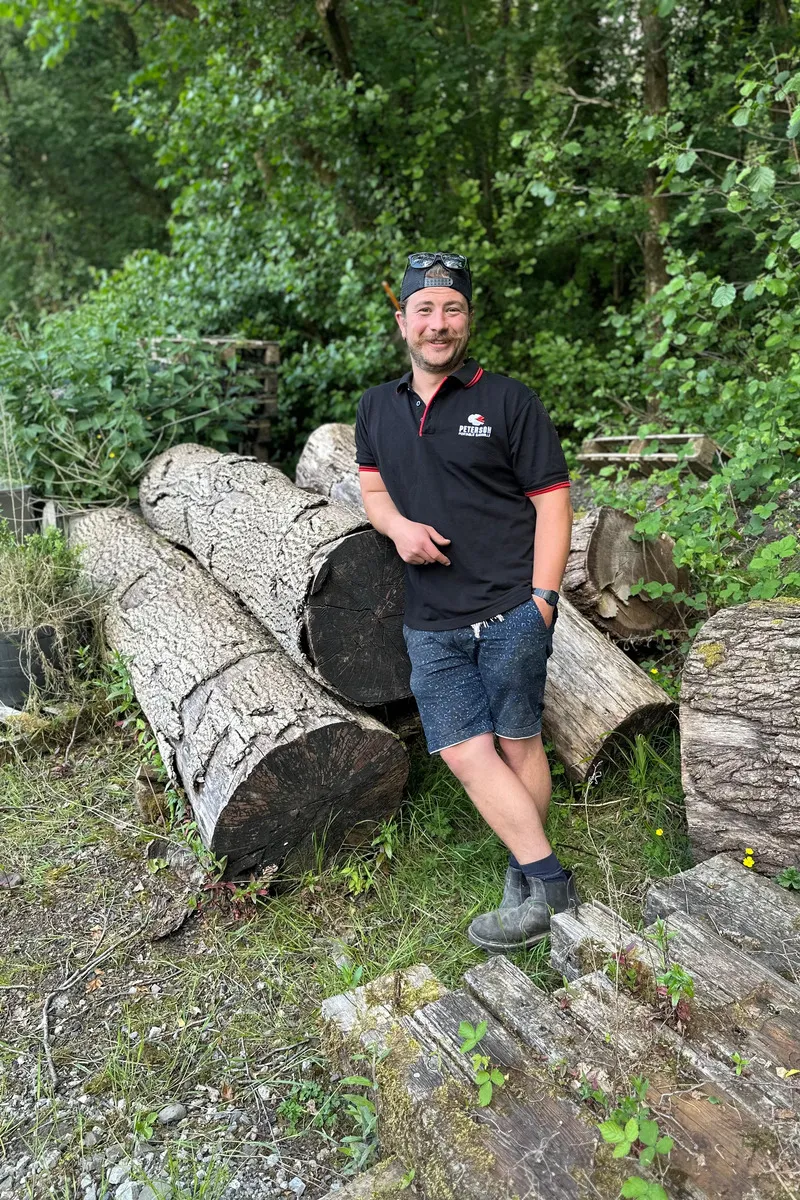
Director focusing on ongoing customer support, troubleshooting, and Welsh territory operations.
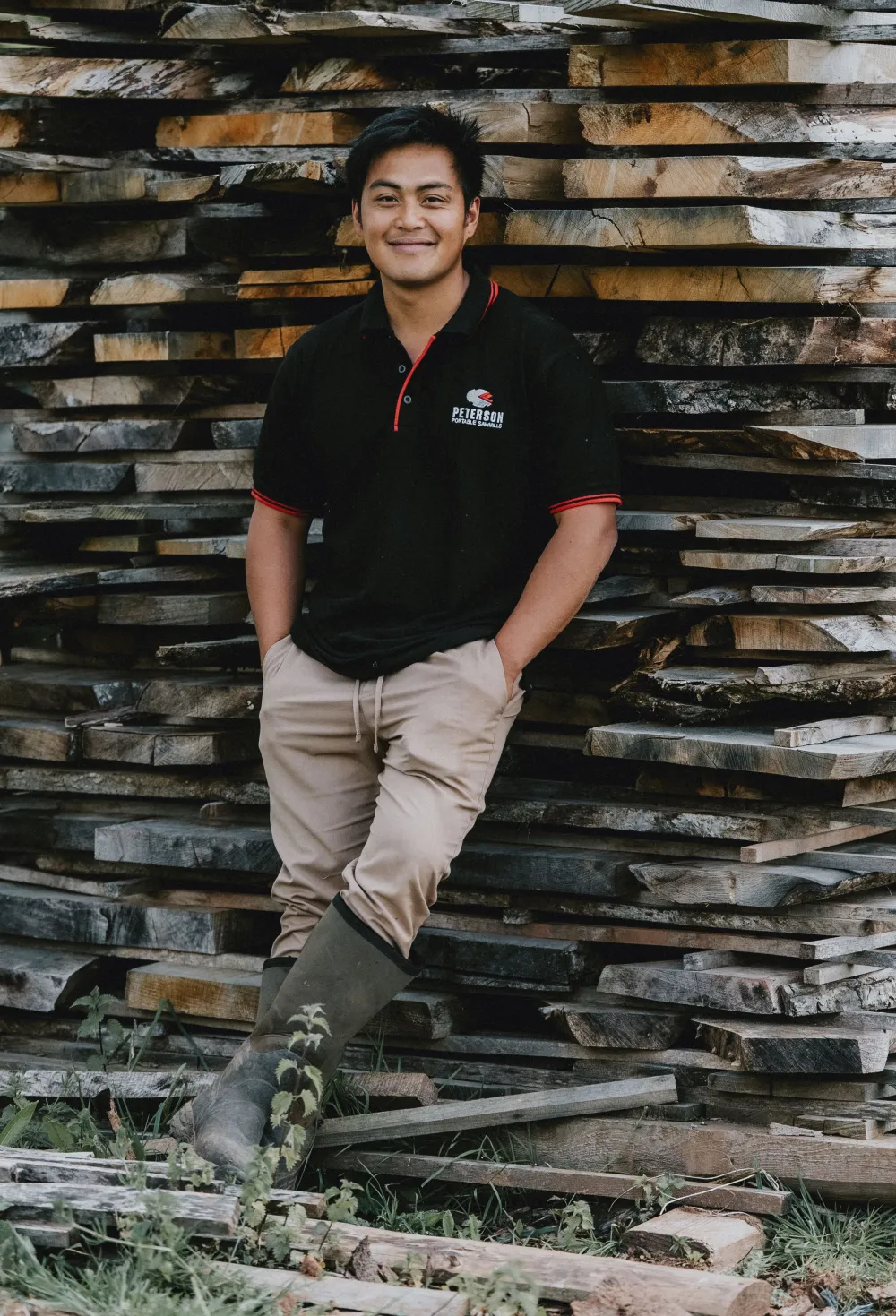
Director managing import, distribution, and South West operations from the home farm.
Strategy & Operations