
Your timber is sawn.
What happens next?
You can see the boards. Now plan how they will become timber you can use: choose the drying route, arrange storage and agree what “ready” means for your project.
Plan the next three steps ↓Drone footage of sawn boards stacked with spacers between the layers. Moisture content and suitability for use need to be checked separately.
Start with the job, not the calendar
Do you have freshly sawn boards for a table, shelves or an outdoor project? Tell the maker where the timber will be used and what you hope to make. Agree the preparation before choosing a drying route.
Define ready
Ask the maker what moisture condition and finished sizes the job needs. Keep your cutting brief from 04 · Conversion to hand.
Arrange the route
Who will dry the boards? Where will they be stored? Ask about air drying, kiln drying or a combination before arranging delivery.
Agree the check
Ask who will assess the timber before machining or use, and how they will decide it is ready. Put that check in your plan.
Why are there gaps between the boards?
Those small spacers are often called stickers. They let air reach the board surfaces; aligned rows also help support the timber as it dries.
Before the boards arrive, ask: “Can you show me how this batch should be stacked and protected?”
Air drying or kiln drying?
Ambient conditions
Air drying
Air circulates through a prepared stack. The weather, species and board thickness affect progress. Air drying alone may not reach the condition needed for heated indoor use.
Ask: “Will air drying suit this job, or will the boards need a kiln afterwards?”
Controlled conditions
Kiln drying
A kiln controls temperature, humidity and airflow. A suitable drying schedule matters: pushing timber too quickly can cause defects. Some operators air dry first, then use a kiln.
Ask: “Can you accept this species and thickness, and what condition must it arrive in?”
Get a quotation for the actual batch, including transport and storage. Confirm the service available rather than assuming the sawyer also operates a kiln.
Check the timber, not just the date
Ask how moisture will be checked across the batch. Meter readings need the right method and interpretation; a dry-looking surface is not the whole answer.
Ask the maker to consider movement, splits and the sizes that remain available before final machining.
Agree how the dried boards will be stored until use. Timber can take up moisture again if its surroundings change.
How long will it take?
Ask the operator for an estimate for your species, thickness, starting condition and drying route. Agree when progress will be reviewed. A fixed “months per inch” rule cannot tell you when this batch will suit your project.
What if the timber is for a building structure?
Drying and strength grading answer different questions. Keep the designer or engineer involved and confirm the required grading and specification through a qualified route. A dried beam is not automatically a beam approved for the design.
Keep a preparation record
The timber
Record the batch reference, species if known, board thicknesses and intended use.
The people
Name the person arranging drying and the person responsible for storage.
The decision
Record the agreed readiness check, the results supplied by the drying operator or maker, and any preparation still required.
You do not need to become a drying specialist. You need a clear handover between the sawyer, drying operator and maker.
Next: put the timber to use
Carry the preparation record into 06 · Use, where the intended product and its requirements come together.
Sources and editorial review
Written by Jerry Andrada. Forestry review: Nick Backhouse, BSc Hons Forestry. Author and reviewer acceptance confirmed on 7 October 2026. Drying requirements for an individual project should be agreed with the maker or drying specialist.
- Scottish Wood: timber seasoning and kiln drying. A Scottish sawmill’s explanation of drying routes and storage; its own times and moisture targets are not universal prescriptions.
- Oregon State University Extension: air- and shed-drying lumber. Supports general stacking and moisture-checking principles. US climate figures and species schedules are not applied to Britain.
The drone footage shows stacked sawn boards. The diagram is an editorial illustration, not an engineering or handling plan.
About the author and forestry reviewer

Jerry Andrada
Author · Co-founder, National Sawmills Ltd
Jerry has approximately 17 years of practical experience, beginning with an apprenticeship in tree surgery at 18. His work has since spanned arboriculture, forestry, regenerative farming, timber extraction and timber conversion.
He acquired his first sawmill at 25 and has worked with portable bandsaw mills, dedicated slabbers and swing-blade sawmills, including contract sawmilling projects across the UK. Today, he is co-founder of National Sawmills Ltd and the UK representative for Peterson Portable Sawmills.
His contribution to these guides is practical: how timber can be accessed, extracted and converted at or close to its source, and what that involves in working conditions.
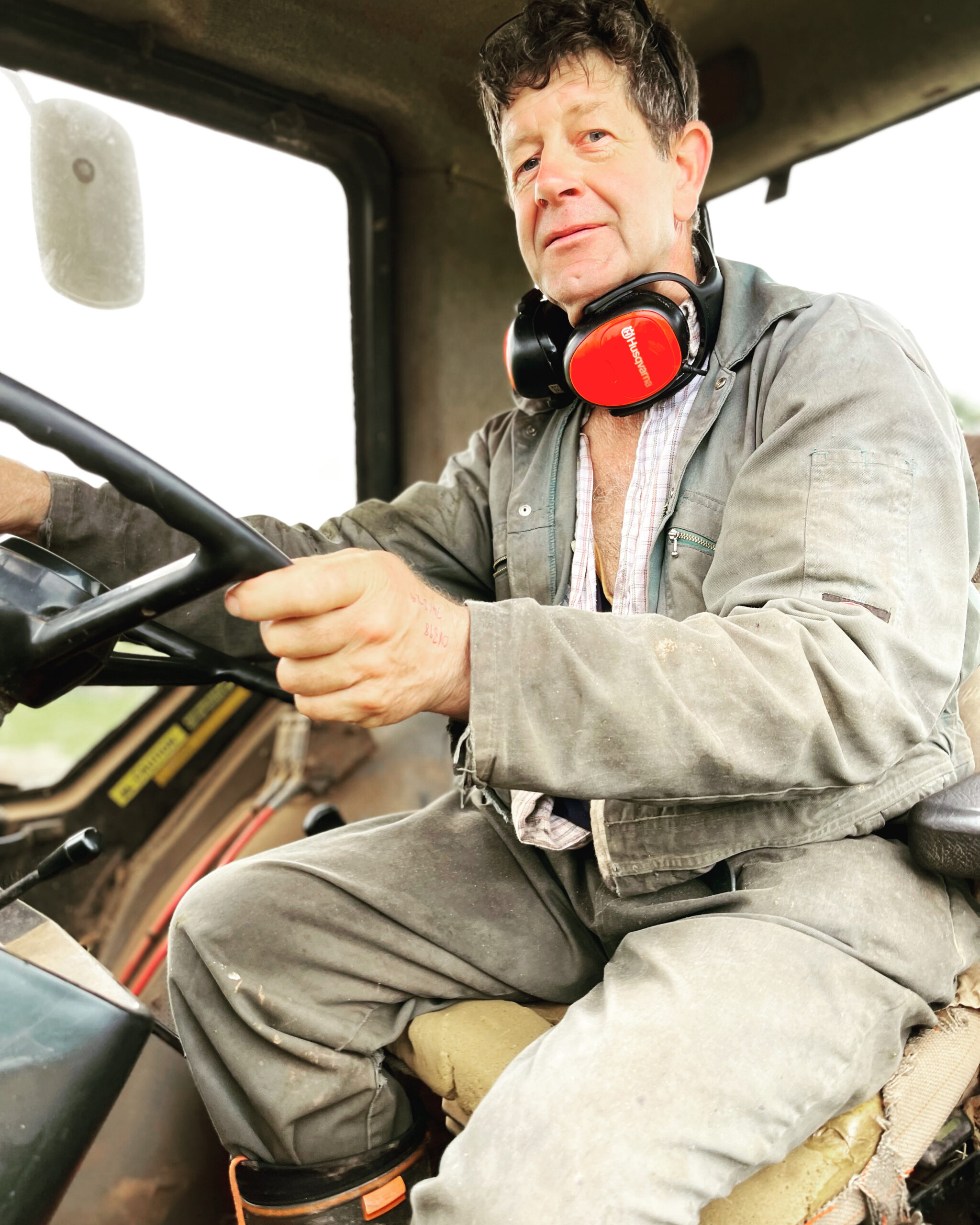
Nick Backhouse, BSc Hons Forestry
Forestry Reviewer · National Sawmills Ltd
Nick Backhouse graduated with a BSc in Forestry from University College of North Wales, Bangor, in 1989.
Following graduation, Nick applied his forestry education at Grantland Farm in Devon, integrating forestry and woodland management within an established working agricultural holding.
Woodland and agriculture have continued to be managed alongside one another at Grantland, giving Nick more than three decades of practical forestry experience within a working farm environment.
Nick also served as a Captain in the Devonshire and Dorset Regiment of the British Army, including service in Northern Ireland.
He now reviews National Sawmills’ educational content from the perspective of his formal forestry education and long-term practical experience at Grantland Farm.
Jerry Andrada and Nick Backhouse have approved the hub and all six guides. Author and reviewer acceptance confirmed on 7 October 2026. Individual trees, sites and intended timber uses still require their own assessment.