
Timber conversion for Linn Botanic Garden, within a reported £3 million garden redevelopment.
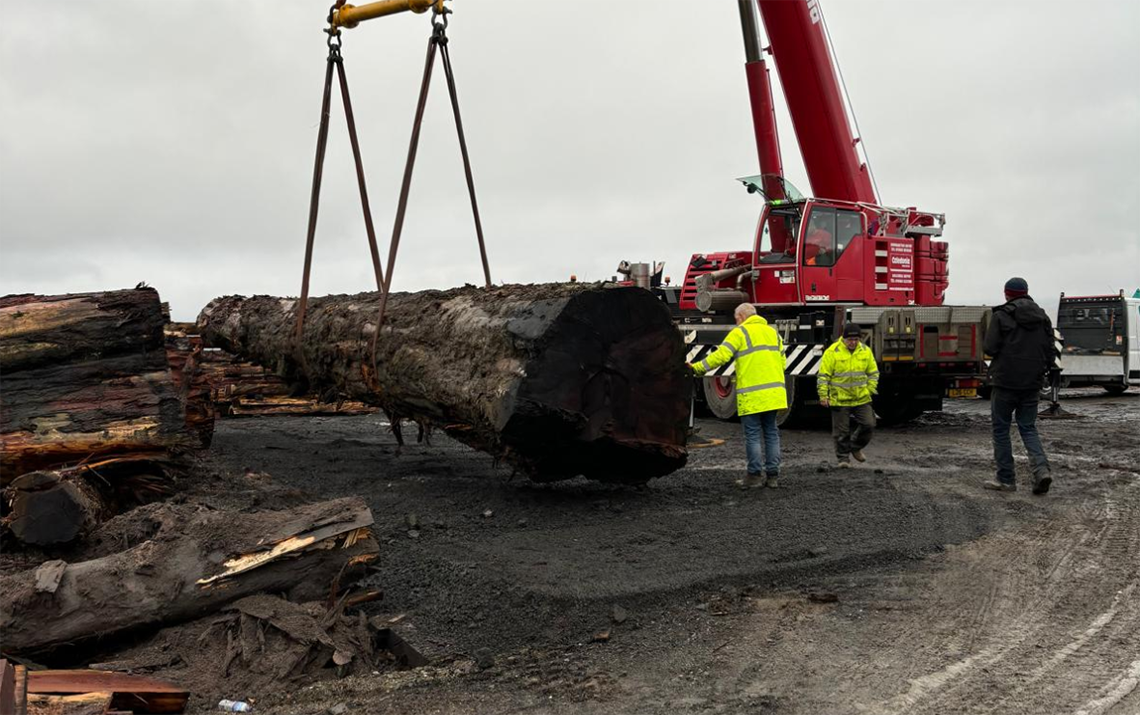
Several large Sequoia trees were felled for development in Rhu, Argyll & Bute. This Linn Botanic Garden account describes how Grantland Timber, supported by National Sawmills, processed them at source with a Peterson portable sawmill.
The proposed destination is a developing horticultural and educational space. The reported £3 million figure refers to the garden redevelopment budget. It is not a valuation of these trees, a milling saving or timber sales income.
The photographs and videos document this particular conversion. They do not establish how often similar logs go unused across Scotland.
The diameter and weight of these logs raised practical questions about handling, equipment capacity and transport. A log that cannot fit one sawmill may still suit another processor.
For this project, processing at the site offered a route worth investigating. However, a fair comparison needs the available alternatives, haulage distances, handling costs and intended products. This account does not contain a measured comparison of those options.
Matthew at Linn Botanic Garden identified a possible use for the local timber. The project team therefore chose to explore conversion near the source, rather than treating disposal as the only option.
Grantland Timber, supported by National Sawmills, used a Peterson portable sawmill to process the Sequoia. This avoided transporting whole logs to a distant mill for this conversion. Other movements and handling still form part of the project.
At Linn Botanic Garden, the milling work provided a way to:
These sections are not presented as graded structural timber. Suitability depends on the intended use, defects, drying and any grading or design requirements. Likewise, maximum yield cannot be claimed without measured inputs and outputs.
Before a similar project, explore assessing a log before milling and how timber conversion works.
The project account proposes landscape features, horticultural spaces and educational uses for the converted timber. These are intended destinations. They should not be read as confirmation that every feature has been completed.
Keeping timber available locally may support those plans. However, the final products, quantities and installation records will provide stronger evidence of the outcome.
This example shows that a portable mill can offer a route for particular large logs. It does not establish that portable milling is suitable or economical for every tree.
For another Scottish project, start with measured log dimensions, safe access, handling arrangements and a defined end product. Then compare on-site milling with the processors and transport options actually available.
Processing near the source can be useful when those conditions fit. By contrast, a fixed sawmill may be the better option for other logs or production needs. National claims about unused timber, exports or transport losses require separate statistical evidence.
Linn Botanic Garden offers a field example of local timber conversion. It also raises practical questions for estates, developments and community projects with large trees.
If you have a similar enquiry, share your location, measured log sizes, photographs and intended products. Our team can discuss Peterson equipment, demonstrations, support and possible milling contacts. Availability and suitability need checking for each job.
Tell us about your logs, site access and intended products. We can help you explore equipment and milling options for your project.