
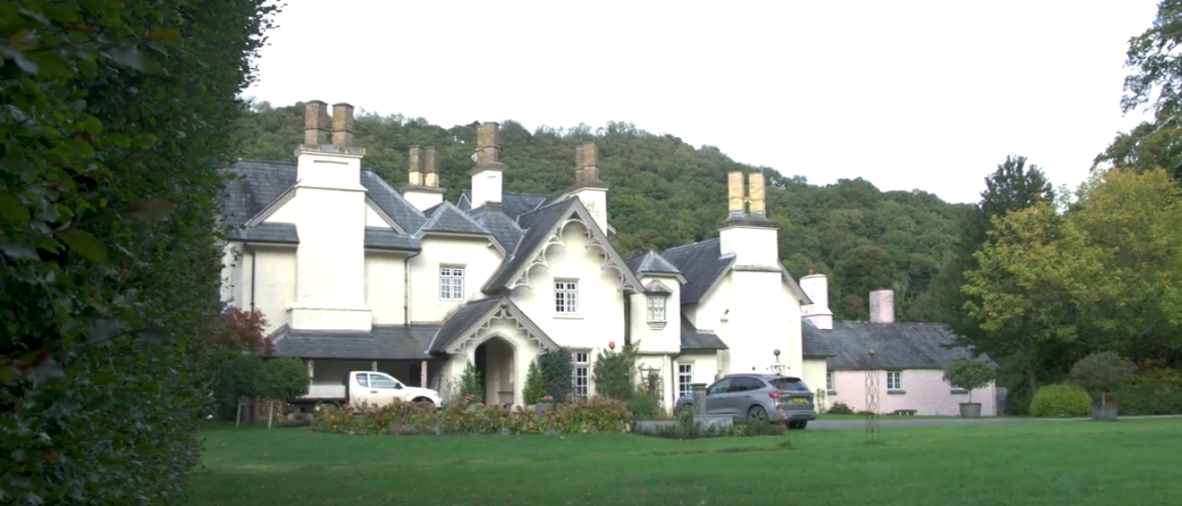
A severe storm left fallen trees across a public road at Lancych Mansion in Pembrokeshire. The estate account reports a £50,000 clearance bill.
This storm-damaged timber account separates the emergency response from questions about later milling. The reported bill is a clearance cost, not a timber valuation or a demonstrated saving from using a sawmill.
Large mature trees fell across a public road. According to the estate account, the council required prompt clearance. Reopening the road took priority over exploring potential timber uses.
Emergency tree work and unstable windblown timber require competent specialists. Assessing logs for milling comes after making the site safe and meeting clearance needs.
The account says the removed timber entered firewood and biomass markets. It does not include a published log inventory, grading assessment or measured comparison with alternative uses.
Therefore, we cannot establish that every log could have become a higher-value product. Firewood or biomass may be suitable for material that cannot meet another use.
Could some storm-damaged timber have been retained for later processing? That is a useful question, but it remains hypothetical for the material already removed.
Answering it would require log dimensions, condition, safe storage, equipment access and a buyer or defined use. Structural products would also need the relevant grading and design checks. A mill alone does not resolve those requirements.
Before a storm, an estate can identify suitable storage areas, handling equipment and potential processing contacts. A plan may preserve options when circumstances allow.
However, this case does not establish a UK trend in storm frequency, severity or timber losses. Those claims need separate meteorological and forestry evidence.
Portable milling can be an option for suitable logs once the site is safe. Possible products include fencing, landscape timber or boards, subject to their condition and intended use.
Compare that route with fixed sawmills, contractors and other outlets. Include clearance, handling, milling, drying and storage costs. This account does not demonstrate that milling would have recovered the reported £50,000 cost.
Lancych Mansion illustrates the difference between emergency clearance and later timber planning. It also prompts a practical question: which logs, if any, can safely be kept for a defined use?
For preparation, read how to assess logs before milling and how timber conversion works. These guides support an enquiry; they do not replace a site assessment.
Following the storm, National Sawmills hosted a Peterson demonstration day at Lancych. It explored equipment and processing options for future work.
The demonstration is field evidence of that activity. It does not show that the previously removed storm timber was milled or that clearance costs were recovered.
Share your location, measured logs and intended products. Our team can discuss demonstrations, equipment and milling enquiries once safe access and handling have been assessed.