
— Case study · Local timber
Why Has The Guardian Written About Us Twice?
Perhaps because Britain's timber problem isn't always about how many trees we have. Sometimes it's about the distance between the tree and the person who could use it.
Twice in the last two years, our work has appeared in The Guardian.
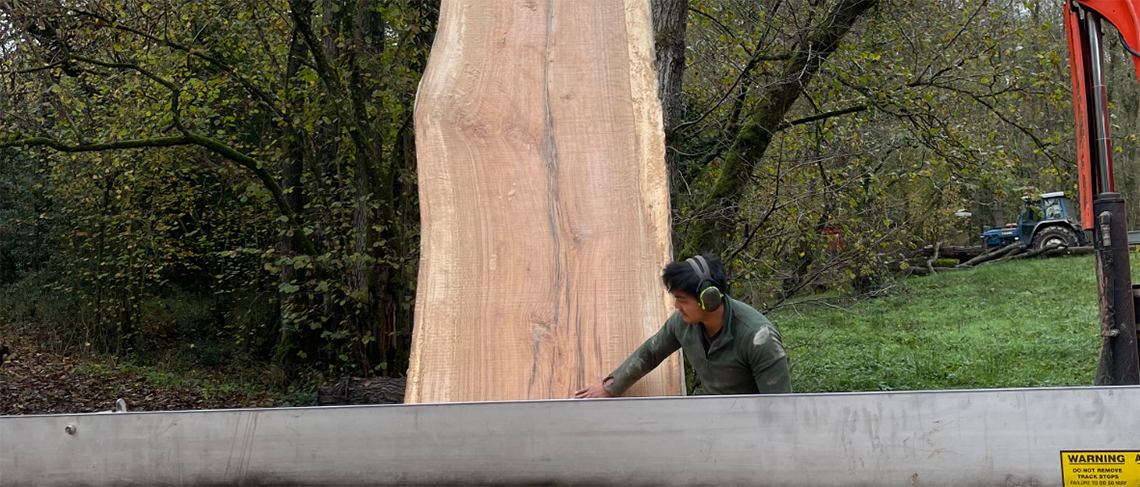
The first followed an extraordinary Devon oak that eventually became an 18-metre community table.
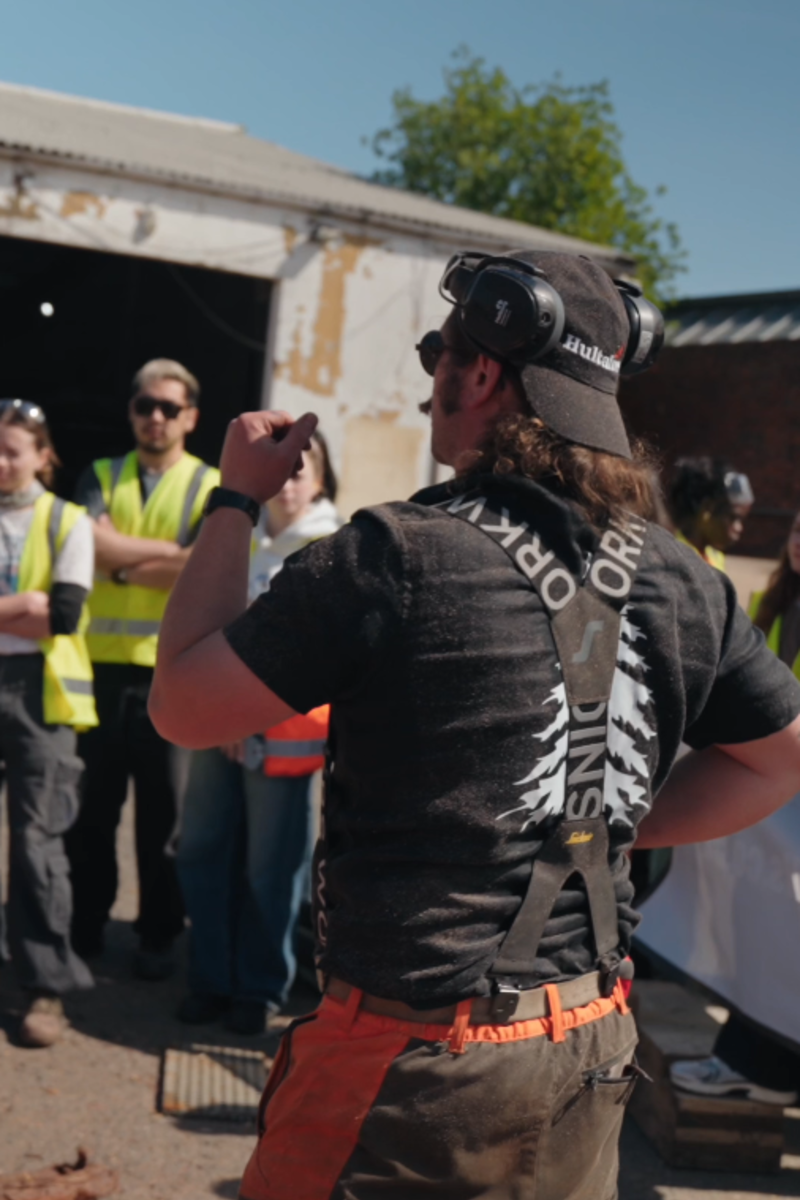
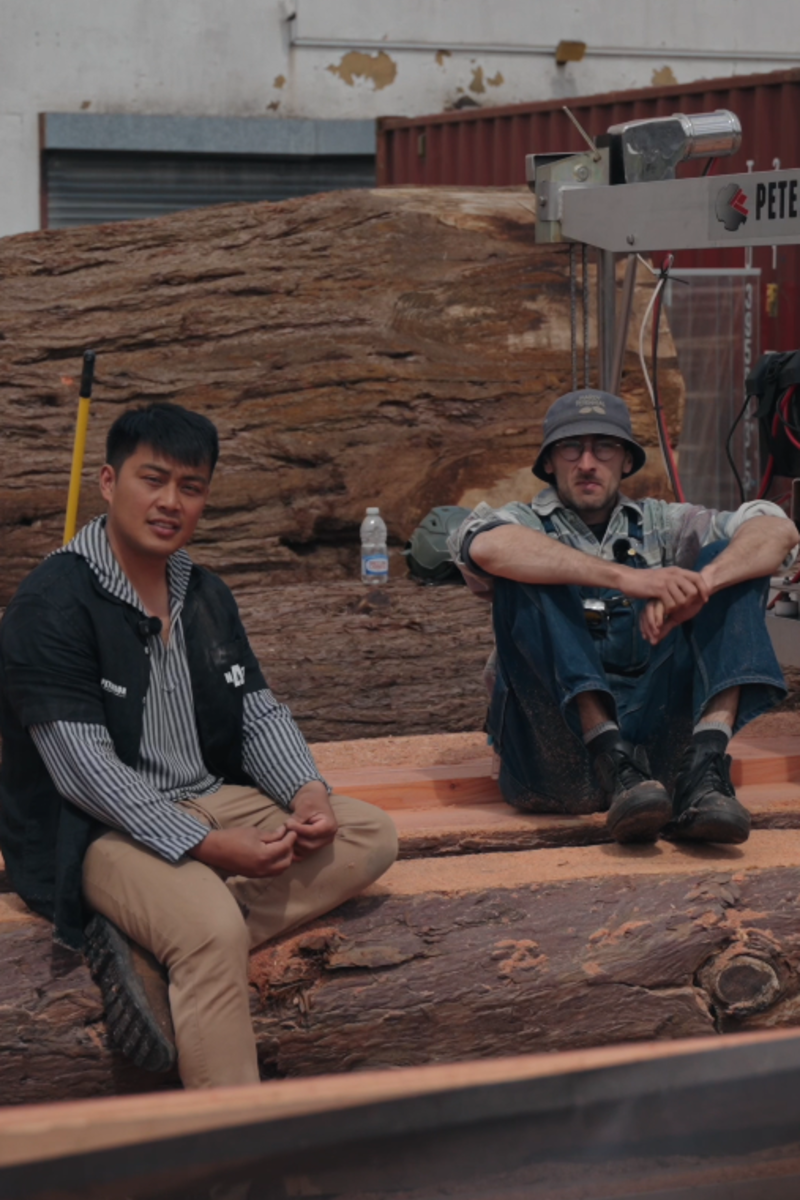
The second followed us into London, where we brought a portable sawmill to Tipping Point East and converted a 105-year-old sequoia in front of students, designers and people trying to rethink how London's materials are used.
Two completely different stories.
But both raise the same question:
How close can we bring the tree, the processor and the person who eventually uses the timber?
Proximity matters
Britain imports considerably more sawn timber than it produces.
That isn't going to disappear. Imported timber and Britain's large centralised sawmills are essential parts of our supply chain.
But there is another opportunity sitting around them.
In The Guardian's London article, YesMake founder Joel de Mowbray described working on a project while trees were being felled immediately beside it.
He needed timber.
There were trees next door.
Yet the timber for the project came from elsewhere.
The problem wasn't necessarily a lack of trees or a lack of demand.
There was no practical connection between the two.
That is what makes proximity interesting.
If timber can be processed closer to where it grows, some material that would otherwise have little value can potentially become useful boards, beams, furniture or building materials.
And if local trees can become valuable local products, something begins to travel backwards through the supply chain.
There is a reason to manage the woodland.
A reason to nurture the trees.
And ultimately, a reason to plant the next ones.
But how does a community woodland get there?
This is where our next demonstration becomes particularly interesting.
The Forest of Marston Vale began with approximately 3.6% tree cover.
Over more than three decades, communities have planted over two million trees, helping transform a Bedfordshire landscape once dominated by brickworks, clay pits and landfill.
Tree cover is now around 17%.
That is an extraordinary achievement.
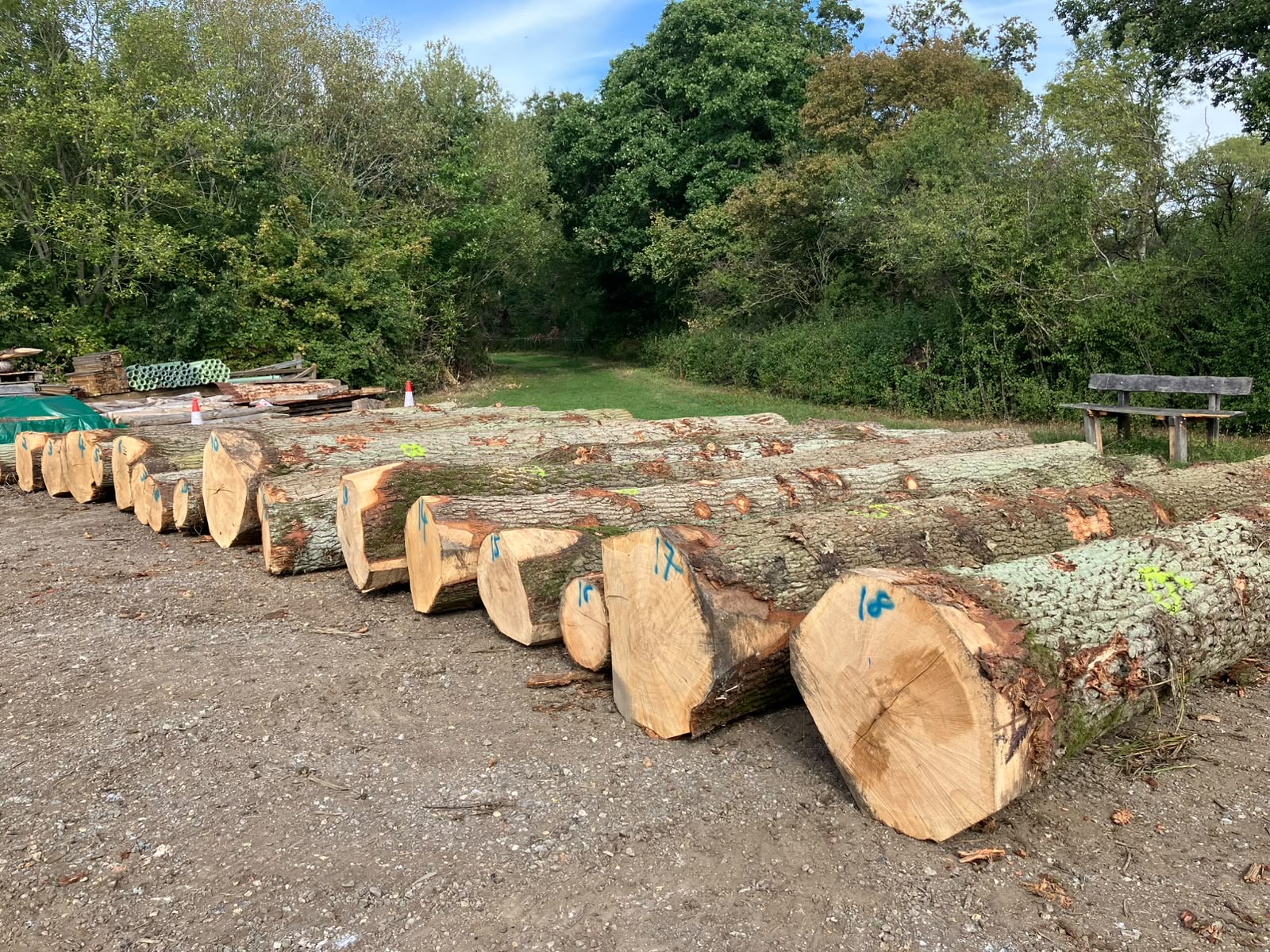
But some of those early woodlands are now more than 30 years old.
And planting a woodland is only the beginning.
It has to be managed.
Trees need thinning.
Material comes out.
Decisions have to be made about what stays and what goes.
And eventually somebody has to answer a deceptively simple question:
What do we do with the timber?
Planting trees is easier to understand than cutting them down
This can be an uncomfortable part of the conversation.
We celebrate planting trees.
Seeing somebody cutting one down can produce a very different reaction.
But woodland management and woodland destruction are not the same thing.
The Forest of Marston Vale is now exploring how its maturing community woodlands can be managed through approaches including Continuous Cover Forestry.
Importantly, it has also identified the potential to develop markets for its woodland products beyond basic firewood and woodchip.
That requires skills.
Markets.
Equipment.
Processing.
And people willing to use the timber.
A community woodland cannot build a local timber economy if it isn't provided with the tools to participate in one.
That's where National Sawmills comes in
On 19 October, we're bringing one of those tools to the Forest of Marston Vale.
We'll be demonstrating a Peterson portable sawmill and showing what happens when processing is taken to the timber rather than automatically taking the timber to a processor.
We aren't arriving with the answer to how Marston Vale should manage its forests.
That's for the people responsible for those woodlands.
We're bringing a tool — and opening the conversation about what becomes possible when communities have access to processing.
Because this is bigger than one sawmill.
If Britain wants to plant more trees, increase productive woodland and make better use of timber growing within our own proximity, then the people managing those trees need viable routes to market.
Otherwise we risk becoming very good at planting trees without creating the infrastructure needed to value what those trees eventually produce.
So why has The Guardian written about us twice?
Perhaps because the machine isn't really the story.
The story is the connection it creates.
In Devon, a fallen oak found a purpose.
In London, a sequoia was converted in front of the people who might actually use materials like it.
And now, in Bedfordshire, we're bringing that same conversation into a community forest planted more than three decades ago.
Tree → woodland → management → timber → processing → local use → reason to plant again.
That's the cycle we're interested in.
And on 19 October, you can come and see it for yourself.
If you've ever looked at woodland management and wondered:
“Why are they cutting down the trees?”
Good.
Come and ask.
Because if we're serious about planting and nurturing the next generation of British trees, perhaps we need to get considerably better at explaining why some of them eventually need to be cut down.
See it for yourself in Bedfordshire
Free demonstration · Monday 19 October 2026 · 10 am
Reynolds & Holcot Woods, Forest of Marston Vale, Bedfordshire MK17 8BW
See our Bedfordshire demonstration day →Get directions: ///spend.crouches.titles ↗