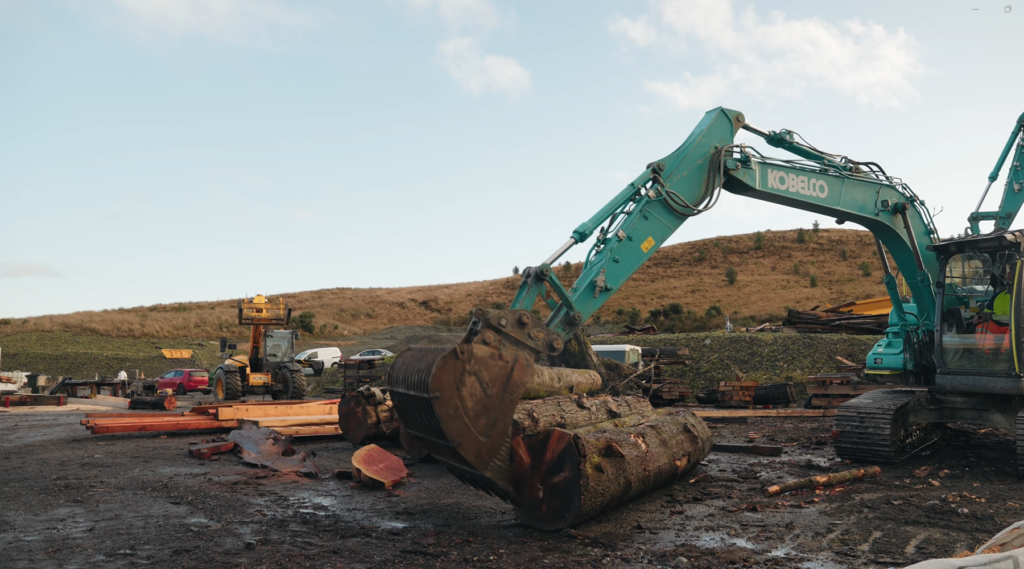
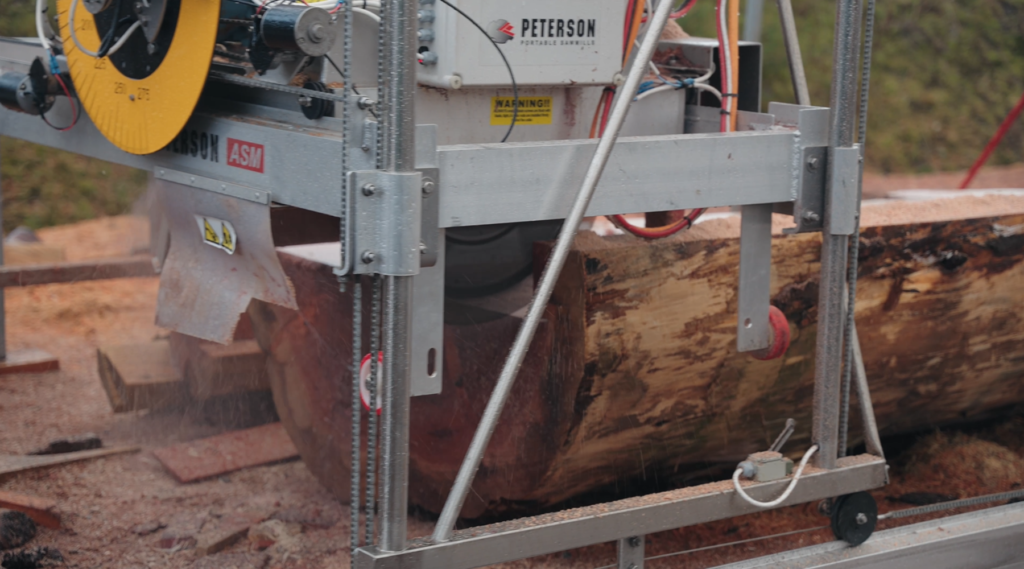
On the 23rd of May, we’re attempting something we believe has never been done before in the UK. We will be milling what is potentially the largest piece of timber ever processed in Britain when diameter and length are considered together.
Not in a factory.
Not inside a major industrial mill.
But in a remote part of Scotland using a portable Peterson Sawmill.
And honestly — that should raise questions.
Because Britain talks constantly about sustainability, forestry, rural investment, and domestic production. Yet across Scotland, enormous quantities of usable timber are still stranded in places where conventional infrastructure no longer reaches.
Part of that story goes back further than most people realise. Following the Beeching cuts, Britain removed over 5,000 miles of railway and shut roughly 2,500 stations. Scotland was hit particularly hard. Entire rural pockets lost direct access to markets almost overnight.
And while most people associate that with passengers — forestry was affected too.
Once transport centralised, processing centralised with it.
The result? If timber sits too far from a major road, rail connection, or industrial processor… its value often collapses.
Not because the material is poor. But because the system struggles to reach it.

That’s the gap we’re interested in.
Small-scale sawmilling isn’t trying to replace industrial mills. That argument misses the point entirely. The real question is: What happens to the material that the centralised system cannot economically touch?
Because that material still exists:
And increasingly in remote parts of Scotland where extraction costs outweigh perceived value. So it gets ignored. Left to rot. Burned. Or chipped for biomass.
Using Peterson Portable Sawmills, we’re demonstrating something very simple:
“If processing can move to the timber instead of the timber always moving to processing — entirely different parts of the country suddenly become economically viable again.”
This is already happening through our Scottish operation. Material that many would have dismissed has already been converted into usable timber for projects including Linn Botanical Gardens.
Not theoretical. Not policy discussion. Practical conversion.
The demonstration day will explore:
Remote access milling
Decentralised forestry infrastructure
The role portable sawmills can play alongside industrial systems
Why Britain loses value from material that could otherwise support local economies
Most importantly, it asks a broader question:
Because if that’s true — there’s an enormous amount of untapped value sitting outside the current system. And Scotland might be one of the clearest places to see it.
Witness the processing of potentially the largest piece of timber ever processed in Britain, and explore the future of decentralised forestry.